How to Make Plant Ties from Twine: A Simple Guide
Founder & Lead Horticulturist at Gardener Expert · RHS Master of Horticulture, Certified Professional Horticulturist (CPH) · 16+ years in residential organic gardening, plant propagation, and structural plant training
If you've ever improvised with leftover string and found it cutting into your tomato stems by midsummer, you already know why learning how to make plant ties from twine is worth a few minutes upfront. Most commercial ties are made from plastic-coated wire or synthetic ribbon that lingers in the soil for years after the season ends.
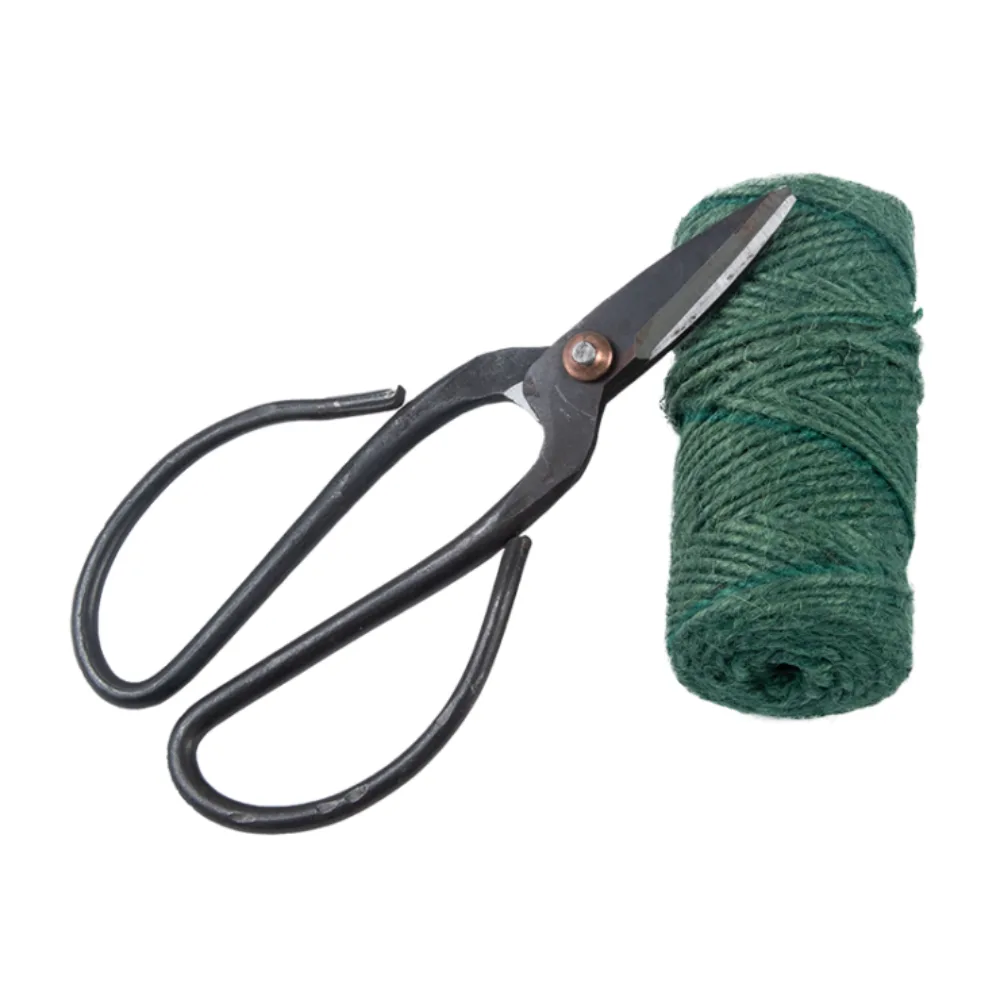
A standard 100-metre roll of natural jute twine, typically costing £3-£6 (or $4-$8), produces around 500 individual ties cut at 20cm. That's enough to support a full vegetable garden for an entire season. The material you choose and the knot you use both matter more than most gardeners realise.
Quick Answer
Making plant ties from twine is quick and simple. Cut natural twine into 20-30cm lengths. Loop around your stake first, then cross both ends around the stem.
Form a figure-8, then tie loosely with a finger-width gap. Use jute, hemp, or cotton for a tie that breaks down in soil.
Why Homemade Twine Ties Are Worth Making (And What Most Gardeners Get Wrong)
Walk through any garden centre and you'll find plastic tie tape, rubber clips, and coated wire rolls. They work, but they don't break down. You end up pulling bits of plastic out of the compost heap months later.
Homemade twine ties are different. Made from natural fibres, they can go straight into the compost bin with the plant material at season's end. No sorting, no microplastics working into the soil over time.
As of 2026, aggregate gardener feedback highlights two consistent benefits: cost savings and flexibility. A single 100m roll of jute twine for plant support costs around £3-£6. Compare that to a commercial pack of 50 plastic-coated ties at roughly the same price.
What most gardeners get wrong is the material. Many reach for whatever string is at hand. Synthetic nylon doesn't break down.
Rough polypropylene baling twine abrades soft stems. Neither is suited to living plants.
The other common mistake is treating a tie as permanent. A snug loop knotted in April can become a cutting wire by June as the plant grows. Both issues are easy to fix once you know what to reach for.
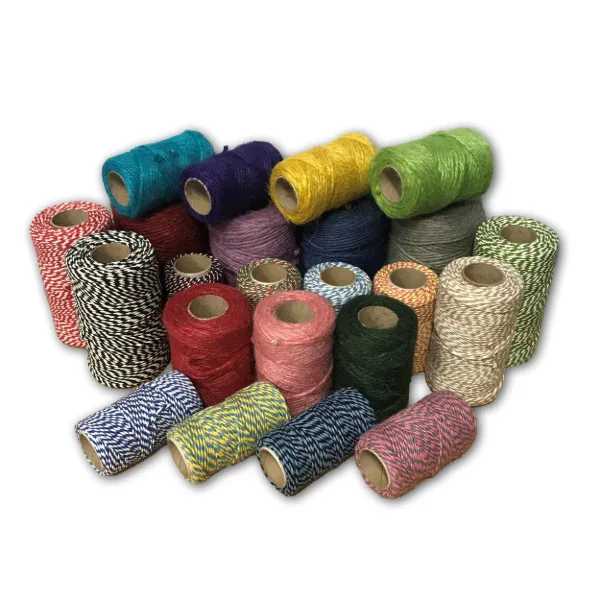
Which Twine to Use: Jute, Sisal, Hemp, and Cotton Compared
Your twine choice affects how long ties last and how gently they sit against stems. It also determines whether they break down cleanly in the soil or need pulling out at the end of the season.
Here's how the four main natural types compare:
| Twine Type | Softness | Biodegrades In | Best For |
|---|---|---|---|
| Jute | High | 1-2 seasons | Annual crops, light climbers |
| Sisal | Medium | 1-3 seasons | Tomatoes, general vegetables |
| Hemp | High | 1-2 seasons | Tender stems, young plants |
| Cotton | Very high | Under 1 season | Delicate or indoor use |
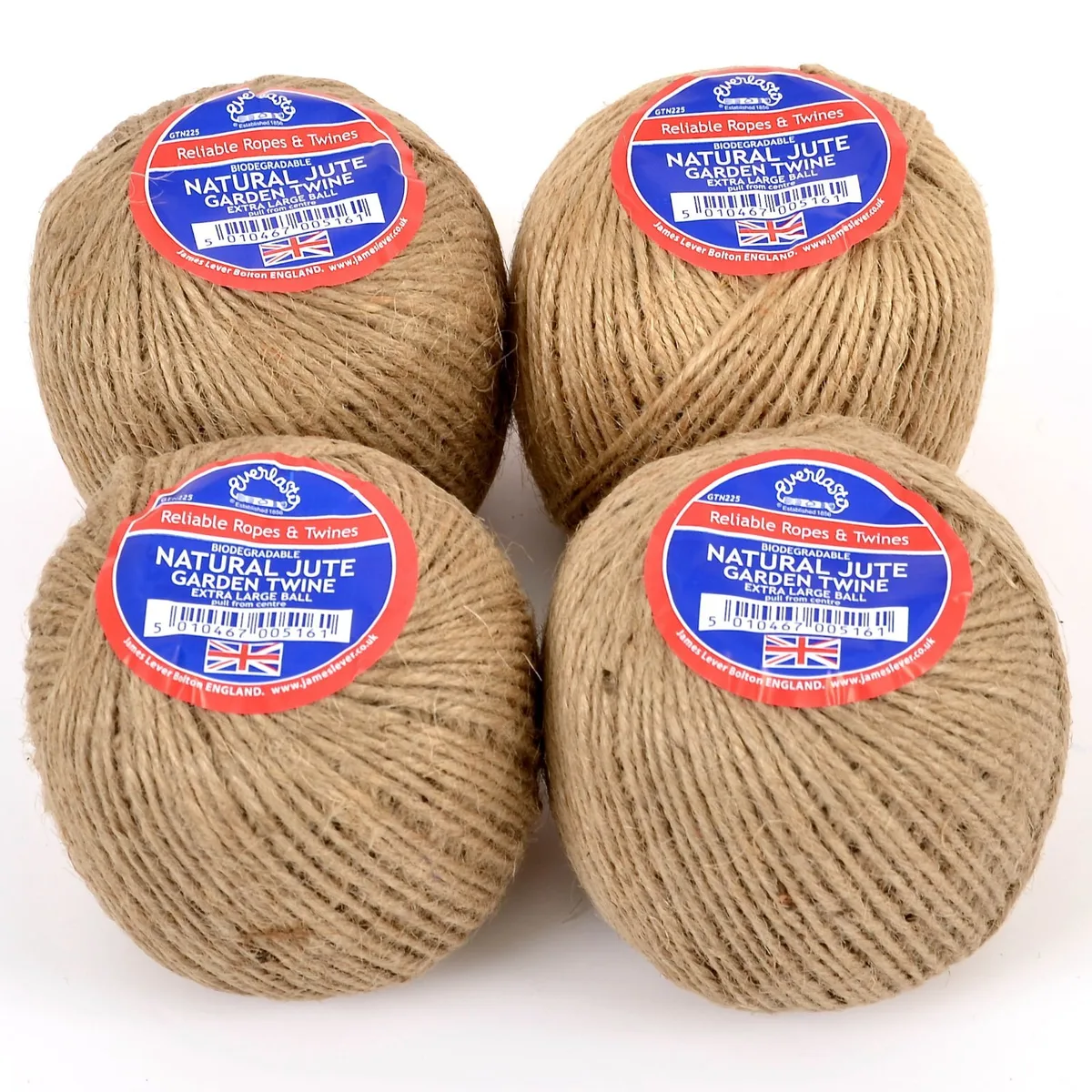
Jute is the most widely used for good reason. It's soft, affordable, and degrades at roughly the right rate for annual crops. Our research into natural-fibre twine for vegetable gardens shows jute holds well across a full UK growing season before breaking down.
Sisal is coarser and lasts longer. That makes it useful for perennials needing support across more than one season. The rougher texture can abrade young or soft-stemmed plants, so keep it for sturdier subjects.
Hemp twine is close to jute in durability but noticeably softer. It's a good match for tender-stemmed plants like dahlias, sweet peas, and young tomatoes where surface abrasion is a real concern.
Cotton is the gentlest option. It degrades within a single season, so save it for short-term indoor use or very delicate seedlings rather than a full outdoor growing season.
How to Make Plant Ties from Twine: Step-by-Step
Getting the cut length right and using the correct knot separates a tie that protects a plant from one that slowly damages it.
Cutting Ties to a Consistent Length (Including the Bulk-Prep Trick)
Standard tie length is 20-25cm for most vegetable plants. For larger stems or a wider gap between plant and stake, cut to 30cm.
For bulk preparation, wrap twine around a piece of cardboard cut to your target length. Slide the loops off, then cut through one end. You'll have a uniform batch ready before the season starts.
A 100m roll of stronger twine for heavier plants yields around 400 ties at 25cm each.
Forming the Figure-8: The Knot That Actually Protects Stems

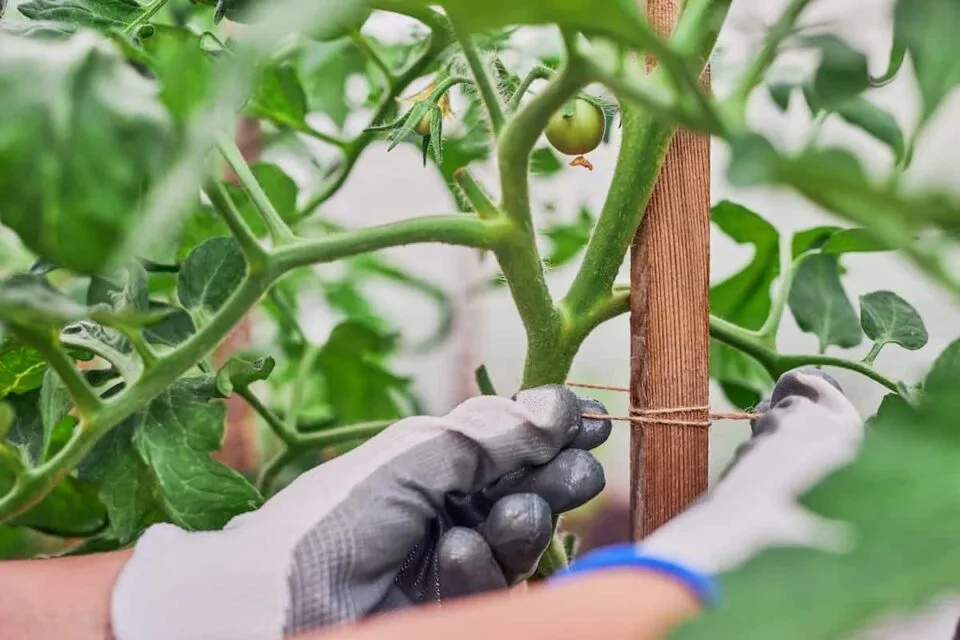
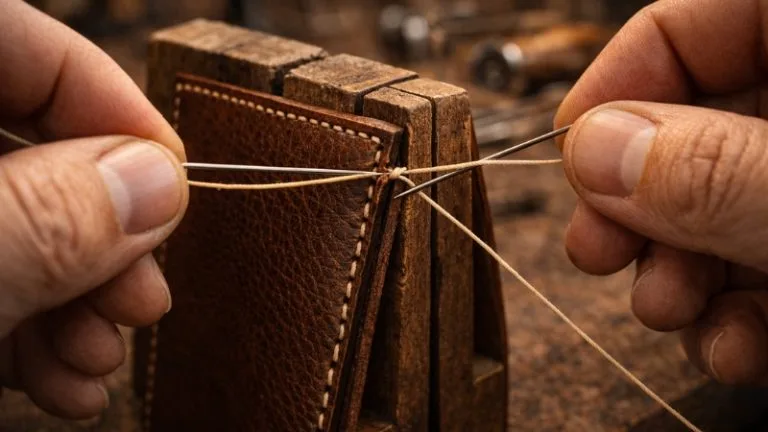
The figure-8 is the essential technique. It creates a buffer loop between the stake and the stem, giving the plant room to move without rubbing directly against its support.
To form it, loop the tie around the stake. Cross the two ends over each other once. Then bring each end around the opposite side of the stem and tie off.
A diagram shows clearly how the cross-point creates a physical separator between stake and plant, which is what stops stem abrasion and girdling as the plant grows.
Securing the Tie Without Overtightening
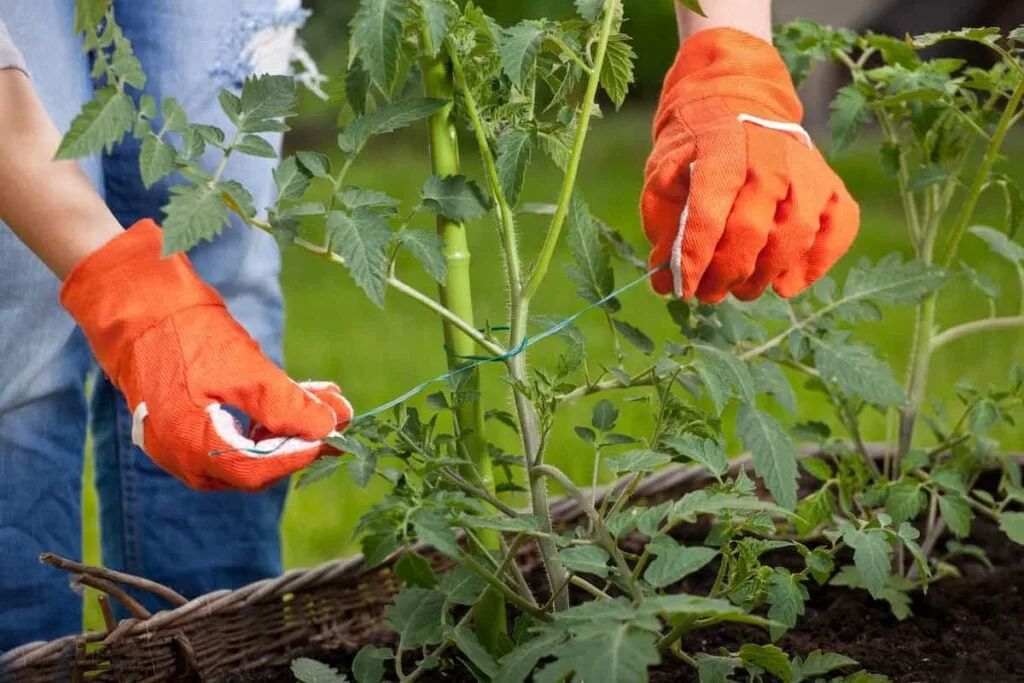
Tie off with a simple knot or bow. The gap between the knot and the stem should be at least the width of your index finger. If you can't fit a finger in, it's too tight.
A bow rather than a fixed knot makes future checks easier. You can loosen it in seconds without cutting the tie, which matters during weekly midsummer maintenance.
Matching Your Tie Method to the Plant
Different plants have different support needs. Tie length, tightness, and check frequency should all shift depending on what you're growing.
| Plant Type | Tie Length | Check Frequency | Notes |
|---|---|---|---|
| Cordon tomatoes | 25cm | Every 2-3 weeks | Tie every 20-30cm of height |
| Dahlias | 25-30cm | Monthly | Soft twine only. Hollow stems bruise easily. |
| Climbing beans | 20cm | Start of season only | Self-twine after initial tie |
| Espalier fruit trees | 30cm | Annually | Bark damage risk if left unchecked |
| Sweet peas | 20cm | Weekly at peak season | Fast growers. Tie frequently. |
| Peas | 15cm | Minimal | Self-cling. Few ties needed. |
Cordon tomatoes are the most tie-intensive plants in most vegetable gardens. A single plant reaching 1.5 metres needs a new tie every 20-30cm of vertical growth. Budget for 5-8 ties per plant across the full season.
Dahlias are a different challenge. Their stems are hollow and bruise easily under pressure. Use the softest twine you have, keep the figure-8 loose, and never pull the knot tight against the stem.
Sweet peas grow fast enough that missing a single week at peak season can leave stems flopping past the tie point. Keep a small bundle of pre-cut ties near the bed so corrections take seconds, not a trip back to the shed.
For fruit trees trained against a wall or frame, use heavy-duty natural twine and leave generous loops. The Royal Horticultural Society recommends checking all tree ties at least once per year to prevent bark constriction as branches thicken.
How to Check and Loosen Ties as Plants Grow
Ties need revisiting throughout the growing season, not just at the point of planting.
During active growth, check ties every 2-3 weeks. In hot summers, when tomatoes and runner beans can put on centimetres in just a few days, weekly checks are more realistic.
Signs a tie needs loosening or replacing:
- The stem is clearly pressing against the loop
- The knot has become too tight to loosen without cutting
- The plant is leaning sideways despite being tied
- The twine fibre is fraying or starting to break
To re-tie, undo the knot carefully, check the stem for any marking, then use a fresh piece of twine. In mild, wet climates, jute and hemp degrade faster outdoors. Ties placed in spring may weaken structurally by late summer, so check the fibre itself, not just the tension.
At the end of the season, natural fibre ties go straight into the compost bin with the plant material. For perennials and fruit trees, remove all ties each year. Even natural twine can cause problems on a thickening woody stem left unchecked through a second winter.
Mistakes That Damage Stems (and How to Spot Them Early)
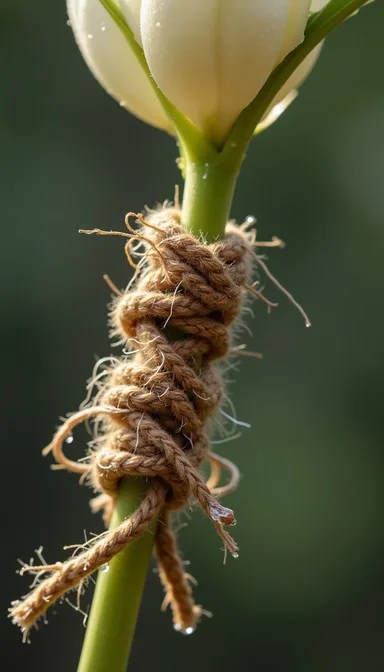
The most common mistake is girdling. It happens when a tie is left in place as the stem thickens, cutting into the plant's vascular tissue over time. A photo of a girdled stem shows a distinct groove pressed into the bark, often with yellowing or callusing around it.
Girdling is slow and easy to miss. By the time it's visible, water and nutrient flow up the stem is already compromised. For woody plants, the damage can be permanent.
For soft-stemmed annuals, it typically means a collapsed or stunted plant by late summer.
The second common mistake is skipping the figure-8. A single loop directly around both stake and stem creates a friction point every time the plant moves in wind. The stem rubs against the stake and the surface abrades over time.
Using the wrong twine ranks third. Rough sisal on delicate stems, synthetic string, or any coated wire near living tissue all carry real risk. Verified grower reports suggest rough-textured ties on young stems can cause visible surface scarring within a few weeks of application.
Watch for these damage signs:
- A pale or yellowing ring at the tie point
- A visible groove pressed into the stem
- The plant leaning heavily despite the tie being in place
- Twine that is fraying or partially snapped under load
Over-tying is a less obvious mistake. Too many ties restrict the natural flex that keeps stems structurally strong. A plant that can't move at all in wind develops weaker growth over time.
Frequently Asked Questions
What type of twine is best for making plant ties?
Jute is the best all-round choice for most gardens. It's soft enough not to abrade stems, strong enough to last a full growing season, and fully biodegradable at season's end. Hemp is a close second and slightly softer, making it better suited to dahlias or young tomatoes.
Avoid synthetic twine near living plants entirely.
How long should I cut plant ties from twine?
For most vegetable plants, 20-25cm is the standard cut length. Larger-stemmed plants or those tied to a wider support need 30cm to allow a proper figure-8 loop with enough slack. Pre-cutting to a consistent length before the season starts saves time and ensures every tie is fit for purpose.
How do I stop twine ties from girdling my plants?
Use the figure-8 technique every time you tie. It creates a physical buffer between stake and stem so the plant isn't in direct contact with its support. Tie loosely enough that a finger fits between the knot and the stem.
Check ties every 2-3 weeks during active growth and loosen them as soon as the stem starts pressing against the loop.
Can old twine plant ties go in the compost?
Yes, if they're made from natural fibres. Jute, hemp, and cotton ties break down in a compost heap along with plant material. Don't compost synthetic string or plastic-coated wire.
If you're unsure of a twine's composition, check the original packaging or put it in general waste.
How many ties does one plant typically need?
A cordon tomato needs roughly 5-8 ties added progressively as it grows. Dahlias need 2-3 per stem. Climbing beans need just a few anchor ties at the start, then self-climb.
Sweet peas need the most consistent tying of any common garden plant, sometimes weekly at their peak.
Similar Posts