Strong Natural Garden Twine: Choose the Best for Plants

Picking the wrong strong natural garden twine can cost you a whole season. It snaps under a heavy tomato truss, rots through before August, or cuts into a growing stem and girdles the plant as it thickens. The difference between a thriving crop and a collapsed one often comes down to a single choice: the fibre in your twine.
As of 2026, jute dominates natural twine sales in the UK and US, yet it fails more gardeners than any other fibre in wet summers. A 3-ply jute twine typically carries a breaking strain of 25, 45 kg, which handles most vegetable crops comfortably. Hemp, sisal, cotton, and coir each behave very differently outdoors.
Understanding those differences before you buy is what separates a good season from a lost one.
Quick Answer: Which Natural Garden Twine Is Actually the Strongest?
Hemp twine is the strongest natural garden twine available. It outperforms jute, sisal, and cotton in tensile strength. Hemp also holds up better under UV exposure than jute does.
For most vegetable gardens, 3-ply jute is the practical everyday choice. Sisal lasts longer than jute but can damage soft stems.
The Real Difference Between Natural Garden Twines (And Why It Matters More Than You Think)
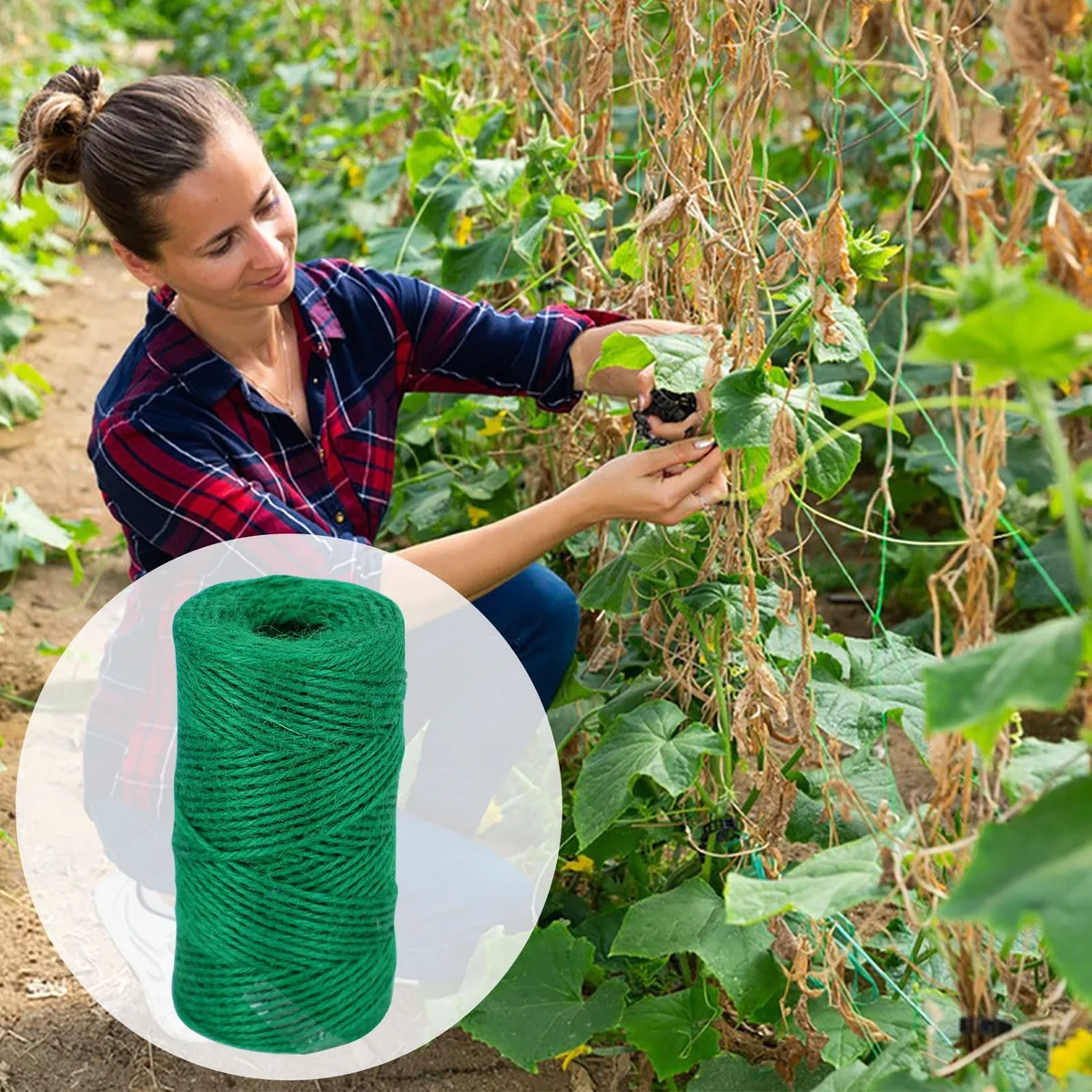
It's easy to assume all natural garden twines are basically the same. They look similar on the shelf, they're sold at similar prices, and they all break down in the compost heap eventually. The similarities stop there.
The fibre a twine is made from sets its strength ceiling. It also determines rot resistance, how it behaves against a wet stem, and whether it's genuinely safe around food crops. Two balls priced identically can have completely different outdoor lifespans.
Aggregate reviews from gardening communities consistently identify three failure modes: twine rotting before the end of the growing season, twine snapping under fruit weight, and twine girdling stems as plants put on bulk. Every one of those failures traces back to the wrong material for the task.
The solution isn't expensive. It's knowing which fibre to use and which ply to reach for.
Jute, Hemp, Sisal, Cotton, and Coir — What Each Fibre Is Actually Made Of
These five fibres come from different plants entirely. Their origin shapes how each one performs in the garden.
Jute is a bast fibre drawn from the inner stem of the Corchorus plant. It's soft, slightly hairy in texture, and absorbs moisture readily. That moisture absorption makes jute compost cleanly at the end of the season.
It also speeds up degradation in prolonged wet weather, which is the core trade-off.
Hemp is also a bast fibre, from the Cannabis sativa plant. Hemp fibres are longer and denser than jute. That density gives hemp twine a higher tensile strength and better UV resistance.
The Royal Horticultural Society recommends natural fibre ties for trained climbing plants specifically because they decompose without leaving residue. Hemp meets that standard more reliably than any other natural fibre across a full growing season.
Sisal is extracted from the leaves of the Agave sisalana plant. The fibres are stiff and coarse. That stiffness gives sisal good durability outdoors, but its rough surface can abrade bark and soft plant tissue.
It outlasts jute in wet conditions but is the wrong choice for anything with a tender stem.
Cotton comes from the seed hairs of the Gossypium plant. It's the softest natural fibre twine available. That softness makes it excellent for young shoots, delicate bark, and grafting ties.
The trade-off is speed of breakdown. Cotton degrades faster than jute in warm, moist soil.
Coir is extracted from coconut husks. It resists moisture and salt naturally, making it the most weather-resilient of the five. It's also the most expensive and the slowest to compost.
For container gardening, coastal plots, or permanent trellises where you need the twine to outlast a single season, coir earns its price.
Ply Count and Diameter: The Two Numbers That Actually Determine Strength
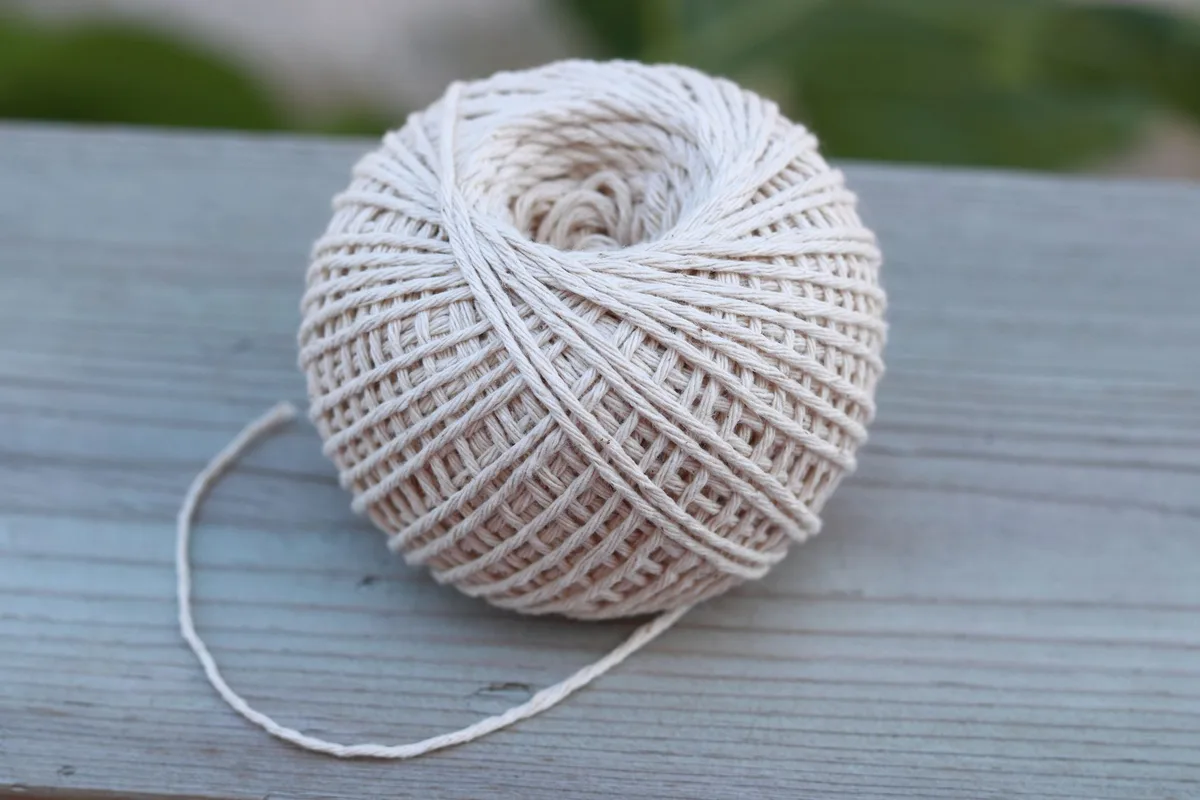
Fibre type sets the material's ceiling. Ply and diameter determine how close to that ceiling a given twine actually performs.
Ply is the number of individual strands twisted together to form the final cord. A 2-ply twine has two strands wound together. A 3-ply has three.
That extra strand isn't simply additive. The twisted structure distributes load across all strands at once, so a 3-ply cord is proportionally stronger than the raw maths would suggest.
Diameter works alongside ply. A thicker cord has more fibre in its cross-section, which directly increases breaking strain. A 2mm 3-ply jute twine and a 4mm 3-ply jute twine use the same material, but the 4mm version holds considerably more weight.
Diameter also affects how the twine feels looped against a stem.
2-Ply vs 3-Ply vs 4-Ply: What to Use and When
| Ply | Typical Diameter | Approx. Breaking Strain | Best For |
|---|---|---|---|
| 2-ply | 1–1.5mm | 10–20 kg | Sweet peas, delicate climbers, young flower stems |
| 3-ply | 2–3mm | 25–45 kg | Tomatoes, beans, peas, general vegetable staking |
| 4-ply | 3–5mm | 45–65 kg | Squash, heavy fruit trusses, tree and shrub stakes |
For most kitchen gardens and allotment beds, 3-ply is the practical default. It handles the weight of most vegetable crops and stays supple enough to tie without cutting into stems when looped correctly.
Thickness Guide: Matching Twine Diameter to Plant Weight
Use 1mm twine for anything delicate (sweet peas, annual flowers, young herb stems). Use 2, 3mm for the bulk of vegetable growing. Reserve 4mm and above for anything that could pull a cane over, such as a loaded squash vine or a tall indeterminate tomato late in the season.
Browse more plant support guides in the gardening resources section of this site.
Side-by-Side Comparison: Jute vs Hemp vs Sisal vs Cotton vs Coir
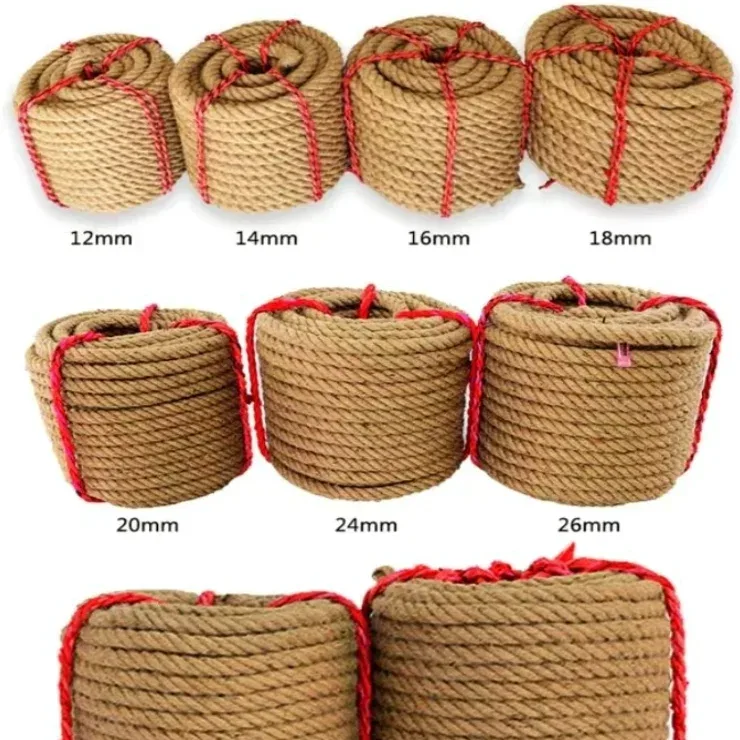
Here's how all five materials compare across the factors that matter most in practice.
| Property | Jute | Hemp | Sisal | Cotton | Coir |
|---|---|---|---|---|---|
| Tensile strength | Medium | High | Medium-High | Low-Medium | Medium |
| Stem softness | Good | Good | Poor | Excellent | Poor |
| UV resistance | Low | Medium | Medium | Low | High |
| Biodegradation speed | Fast (2–6 months) | Moderate (6–18 months) | Slow (1–3 years) | Very fast (1–5 months) | Very slow (3–5 years) |
| Compostability | Excellent | Excellent | Good | Excellent | Moderate |
| Typical cost per ball | Low | Medium-High | Medium | Low-Medium | High |
| Best season fit | Single season | Multi-season | 1–2 seasons | Short season only | Multi-season |
Jute and cotton are affordable and widely available but short-lived. Hemp is the performance choice for growers who need twine that lasts the full growing season. Sisal sits in the middle on durability, but its rough texture rules it out for delicate work.
Coir lasts longest but doesn't compost efficiently. If you want everything to break down in one compost cycle, jute or 3-ply hemp is the smarter fit.
Per data from the Food and Agriculture Organization, jute and hemp are the most widely used bast fibres in global agricultural applications. Jute leads on volume and affordability. Hemp commands a price premium for its tensile performance.
Jute Twine: The Allotment Staple with One Major Weakness
Jute is the default for good reason. It's affordable, soft on most plant stems, and composts cleanly at season's end. You can pull the whole tangle of plants and twine from a cane and throw it straight on the heap.
The weakness is moisture. Jute absorbs water readily, which accelerates degradation. In a wet summer, 2-ply jute on an outdoor stake can start fraying within six to eight weeks.
For growers dealing with consistent rainfall, that's a real problem.
The fix is a ply upgrade. Manufacturer specs across major natural twine brands show 3-ply jute holds notably longer than 2-ply outdoors, even through wet spells.
Best for: tomatoes, beans, peas, summer flowers, general vegetable staking.
Not ideal for: prolonged wet conditions or multi-season use.
Hemp Twine: The Strongest Natural Option and What You Give Up for It
Hemp earns its premium. Its denser bast fibres give it a higher tensile strength than jute at the same ply count. Aggregate manufacturer data shows 3-ply hemp breaking strains running 10, 20% above equivalent 3-ply jute products.
UV resistance is the other advantage. Hemp holds together through a full growing season in direct sun where jute would weaken from solar exposure alone. For polytunnel growers or anyone in a reliably sunny climate, that difference adds up.
What you give up is price and compost speed. Hemp costs more per ball and breaks down more slowly. If you're composting plant waste in one seasonal clear-out, jute still composts more conveniently.
Best for: heavy fruiting crops, multi-season climbing plant training, polytunnel growing.
Not ideal for: large allotments on a tight budget where you're tying hundreds of plants per season.
Sisal Twine: Tough, Rough, and Not Always Right for Plants
Sisal is genuinely durable. Its Agave-derived fibres resist moisture better than jute and hold up through a full growing season without significant breakdown.
The problem is texture. Verified buyer feedback across UK garden supplier platforms consistently flags sisal for stem abrasion on soft-stemmed plants. The rough surface can grip and tighten against a growing stem rather than giving with it.
Sisal works well for structural jobs: lashing bamboo canes together, bundling harvested crops, or securing mature woody climbers where bark abrasion isn't a concern.
Best for: structural cane ties, harvested crop bundling, mature woody climbers.
Not ideal for: tomatoes, beans, sweet peas, or anything still actively growing.
Cotton Twine: The Softest Choice and Where It Falls Short
Cotton won't cut into soft stems, won't abrade bark, and ties cleanly around delicate new growth. For grafting ties, seedling support, or securing a fragile shoot to a short stake, it's the safest option available.
The trade-off is lifespan. Biodegradation data from natural fibre manufacturers puts cotton breakdown at one to five months in warm, moist outdoor conditions. That's shorter than any other fibre in this comparison.
Cotton suits short-season or indoor growing jobs. For anything running through to late autumn, it will likely fail before the season ends.
Best for: grafting, seedling support, indoor growing, short-season flowering plants.
Not ideal for: outdoor use lasting more than a few months.
Best Natural Twine for Each Garden Use Case
For most kitchen garden staking (tomatoes, beans, peas, summer climbers), 3-ply jute is the practical default. If you've had twine snap or rot mid-season before, step up to 3-ply hemp for your heaviest crops.
For delicate plants like sweet peas, young annual climbers, or tender new growth on trained fruit trees, softness matters more than strength. Two-ply jute or cotton handles both without risking stem damage.
For heavy squash, pumpkins, or large-fruited tomatoes with multiple loaded trusses, don't underestimate the weight. Four-ply jute or 3-ply hemp is the right call, not the standard ball you'd reach for with beans.
| Use Case | Recommended Fibre | Ply |
|---|---|---|
| Standard tomatoes | Jute | 3-ply |
| Heavy-cropping tomatoes, squash | Hemp | 3-ply or 4-ply |
| Beans and peas | Jute | 2-ply |
| Sweet peas and delicate flowers | Cotton or jute | 2-ply |
| Trained roses and wisteria | Jute or hemp | 3-ply |
| Structural cane lashing | Sisal | Any |
| Harvested crop bundling | Sisal or coir | 2-ply |
What "Natural" Doesn't Always Mean: Dyes, Binders, and Organic Certification
Not every twine labelled "natural" is free from synthetic processing. Some manufacturers add chemical binders to improve twist consistency, or use synthetic dyes to achieve a uniform colour. Those additives can leach into soil over time, which matters around food crops.
The safest marker is GOTS (Global Organic Textile Standard) certification for hemp and cotton twines. For jute and sisal, look for an explicit "undyed and unbonded" claim from the manufacturer. Unbleached twines in their raw natural colour (brown, tan, or cream) are the most reliable default when no certification is listed.
If you hold a formal organic growing certification, verify twine compatibility with your certifying body's input guidelines before the season starts.
How to Tie Garden Twine Correctly So It Doesn't Damage Plants
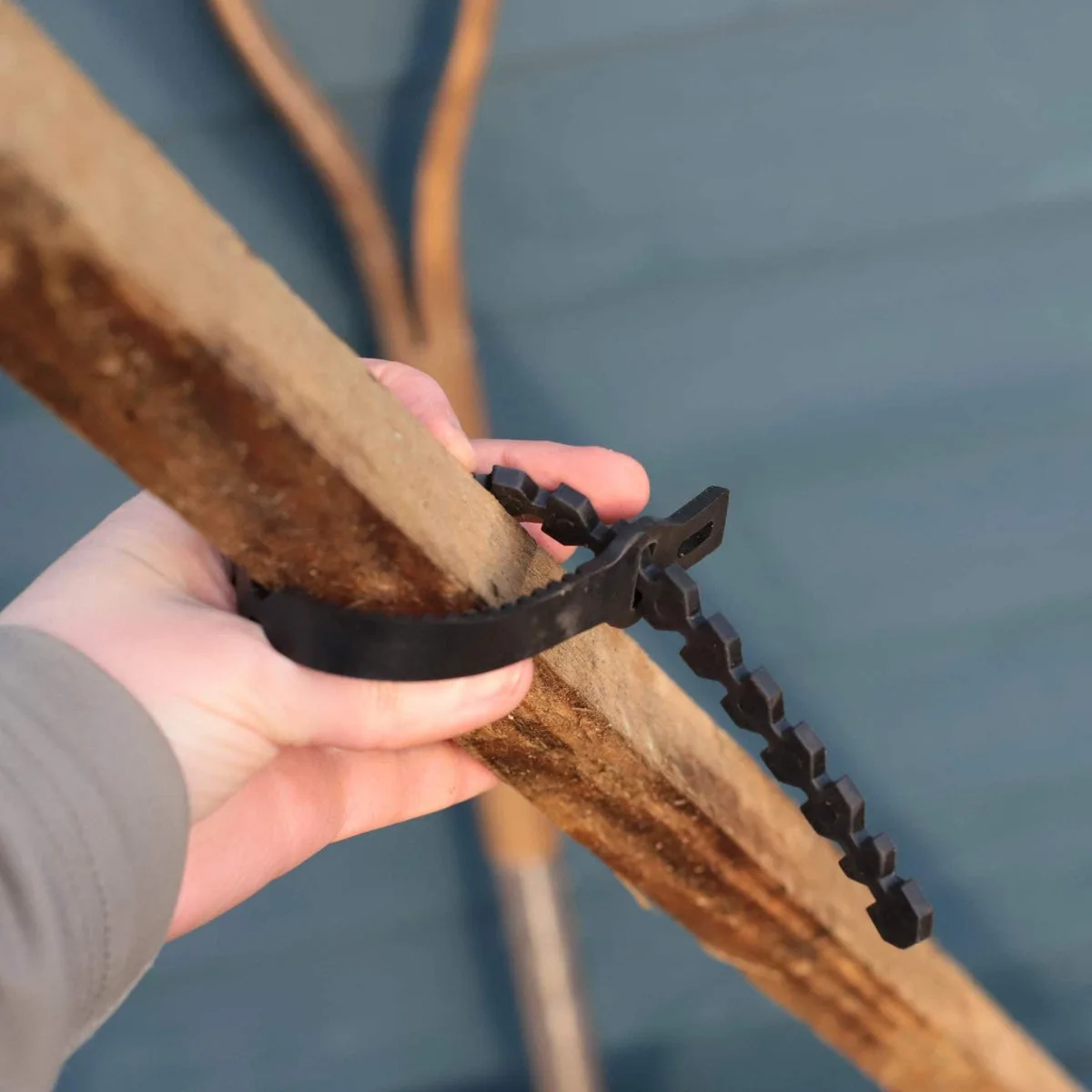
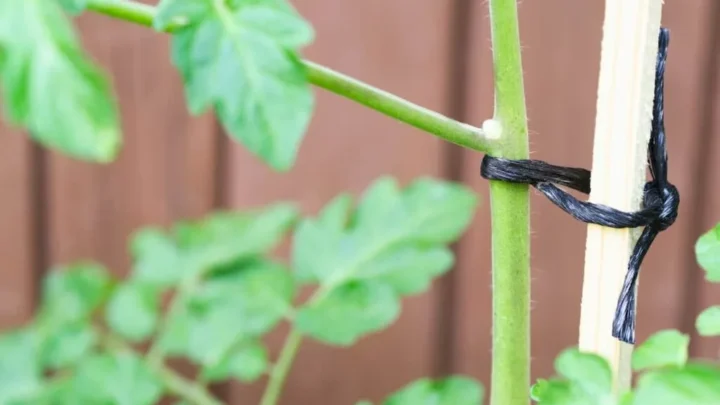
The figure-of-eight is the standard technique for a reason. Loop the twine around the plant stem, cross it over itself, then loop around the cane. That cross sits between stem and stake, preventing direct contact and the abrasion or girdling that follows.
Always tie loosely. A loop that feels snug in May will be cutting into a thickening stem by July. Leave enough slack for the stem to put on at least 30, 40% more girth before the twine starts to restrict it.
Check ties mid-season on fast-growing crops. Tomatoes and climbing beans put on rapid bulk. Re-tie any loop that looks taut, or any stem that has grown past the tied point.
Mistakes That Ruin Good Twine (And the Plants You're Trying to Protect)
Tying too tightly is the most common error. A taut loop around a growing stem restricts sap flow and can cause dieback above the tie point. It's easy to do and hard to spot until the damage is visible.
Using the wrong ply for the crop is the second failure. Aggregate user reviews consistently report snapped twine on heavy tomato trusses where 2-ply jute was used. The fibre wasn't the problem.
The ply count was.
Poor storage shortens twine life before it ever reaches the garden. Jute and cotton left in damp conditions will start to degrade in the ball. A sealed container or a dry shelf keeps them in good condition between seasons.
Pricing and What You Actually Get Per Ball
Natural twine is priced by weight, not length. Two balls both labelled "100g" can yield very different amounts depending on fibre and ply.
A 100g ball of 2-ply jute typically yields 70, 90 metres. The same weight in 3-ply jute gives 50, 65 metres. Hemp yields less per gram because the fibre is denser.
Jute runs roughly £2, £4 per 100g ball in the UK and $3, $5 in the US. Hemp typically runs £4, £8 per 100g equivalent.
Buying in 500g or 1kg balls cuts the cost per metre significantly on any fibre. For growers tying large volumes each season, bulk purchasing is consistently the better value.
Frequently Asked Questions
How long does natural garden twine last outdoors?
It depends on the fibre. Jute lasts roughly one growing season in wet conditions, up to two in dry climates. Hemp holds for one to two full seasons outdoors.
Cotton degrades fastest, often within one to five months in warm, moist conditions. Sisal lasts one to two seasons. Coir can last several years.
Is natural garden twine safe for organic growing?
Most undyed, unbonded natural twines are safe for organic use. Look for GOTS-certified hemp or cotton, or explicitly chemical-free jute. Avoid twines with synthetic dyes or binders near food crops.
If you hold a formal organic certification, check your certifying body's approved input list before the season.
Can I compost garden twine after the season?
Jute, cotton, and hemp all compost cleanly alongside plant waste. Sisal breaks down more slowly but will decompose over time. Coir is the exception.
It takes several years to fully decompose, so it's better disposed of separately rather than added to a standard garden compost heap.
What is the strongest natural twine for heavy tomatoes?
Three-ply hemp is the strongest option for heavy indeterminate tomatoes. Its higher tensile strength and better UV resistance make it better suited than jute for crops running to late autumn. If you prefer jute for cost reasons, 4-ply is a reliable alternative for heavily loaded trusses.
The Final Verdict: Best Natural Garden Twine by Situation
For most home vegetable gardeners, 3-ply jute is the right choice. It's affordable, strong enough for the majority of garden crops, and composts cleanly at season's end. If wet summers have caused jute to fail on you before, or you're growing heavy indeterminate varieties through to autumn, 3-ply hemp is worth the price difference.
Use cotton for grafting, seedling ties, and delicate indoor work. Use sisal only where softness doesn't matter. Keep coir for permanent structures or exposed coastal growing where weather resilience comes first.
The right twine doesn't need to be expensive. It just needs to match the job.

Similar Posts





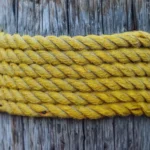
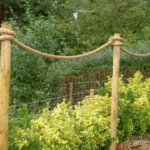
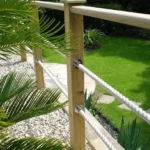
[…] the natural choice for tensioning a horizontal run of robust natural twine between two posts before locking it […]
[…] you pair your canes with organic plant ties, it's worth confirming whether the canes themselves can follow those ties into the compost […]
[…] temperatures fluctuate through winter, that trapped moisture feeds mould and accelerates rot. Use rot-resistant natural twine or breathable hessian […]