How to Tie Plants to Bamboo Canes Without Damage
Founder & Lead Horticulturist at Gardener Expert · RHS Master of Horticulture, Certified Professional Horticulturist (CPH) · 16+ years in residential organic gardening, plant propagation, and structural plant training
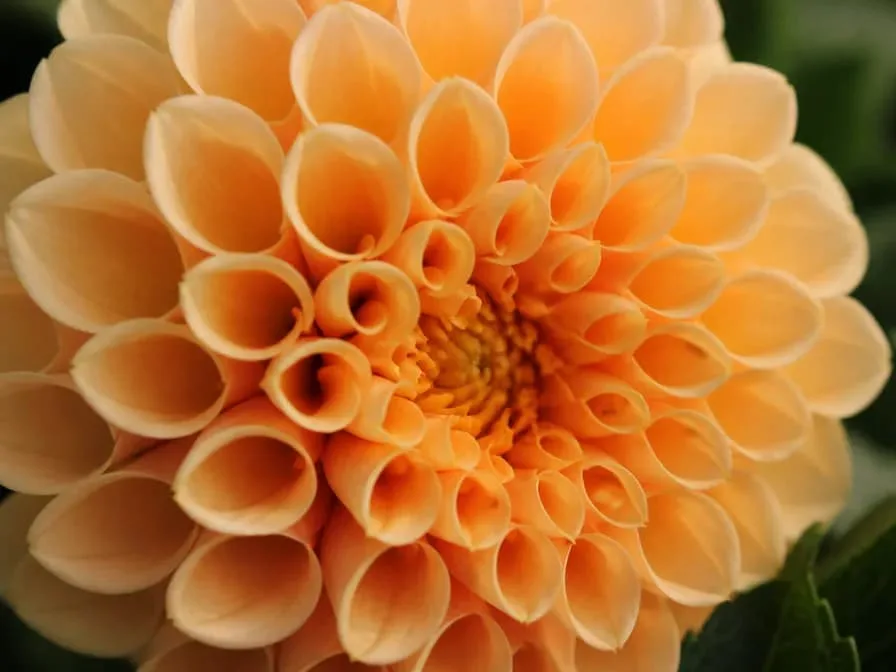
Knowing how to secure plants to bamboo canes sounds simple until things go wrong. A dahlia snaps in a summer gust, or a tomato stem gets slowly strangled by a forgotten tie. The damage builds quietly, long before you notice it.
The Royal Horticultural Society recommends leaving at least 1-2cm of slack between the stem and the cane. That single measurement is the difference between a thriving plant and a girdled one. Get the technique right from the start and you'll rarely need to revisit it.
Everything below covers the materials, the method, and what not to do.
Quick Answer
To secure plants to bamboo canes, use the figure-8 tie method. Loop your twine around the cane first. Cross it once between cane and stem.
Loop loosely around the stem and knot on the cane side. Leave a 1-2cm gap between stem and cane. Soft jute or rubber ties work best for most plants.
Why Plants Snap, Flop, and Get Strangled (and How Tying Technique Is to Blame)
Most stem damage comes from two opposite problems: too much rigidity or not enough support.
Ties that hold a stem completely rigid prevent it from building the strength it needs. Plants develop stronger stems by flexing slightly in the wind. A tie's job is guidance, not immobilization.
Lock the stem too firmly and it stays weak.
The opposite is just as damaging. A tall plant with no support will flop under its own weight, and once a stem bends or snaps, it rarely recovers. Dahlias, delphiniums, and tall tomatoes are most at risk during the growth surge of late spring.
Girdling is the sneakiest issue. A tie that fits fine in May can turn cutting by July as the stem thickens. It slowly cuts into vascular tissue and blocks water and nutrient flow.
The first sign is usually the top of the plant wilting for no clear reason.
The right material and the figure-8 knot prevent all three.
Choosing the Right Cane and Tie Material for Your Plant
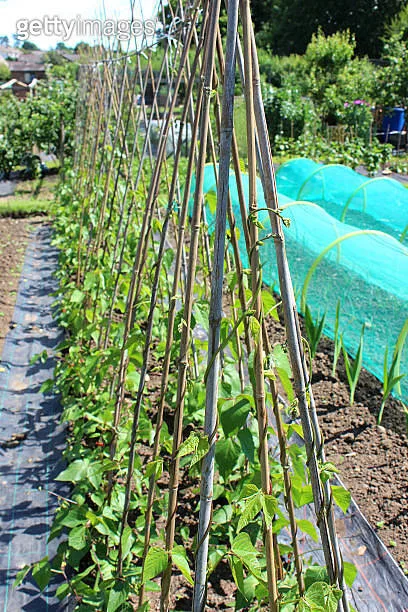
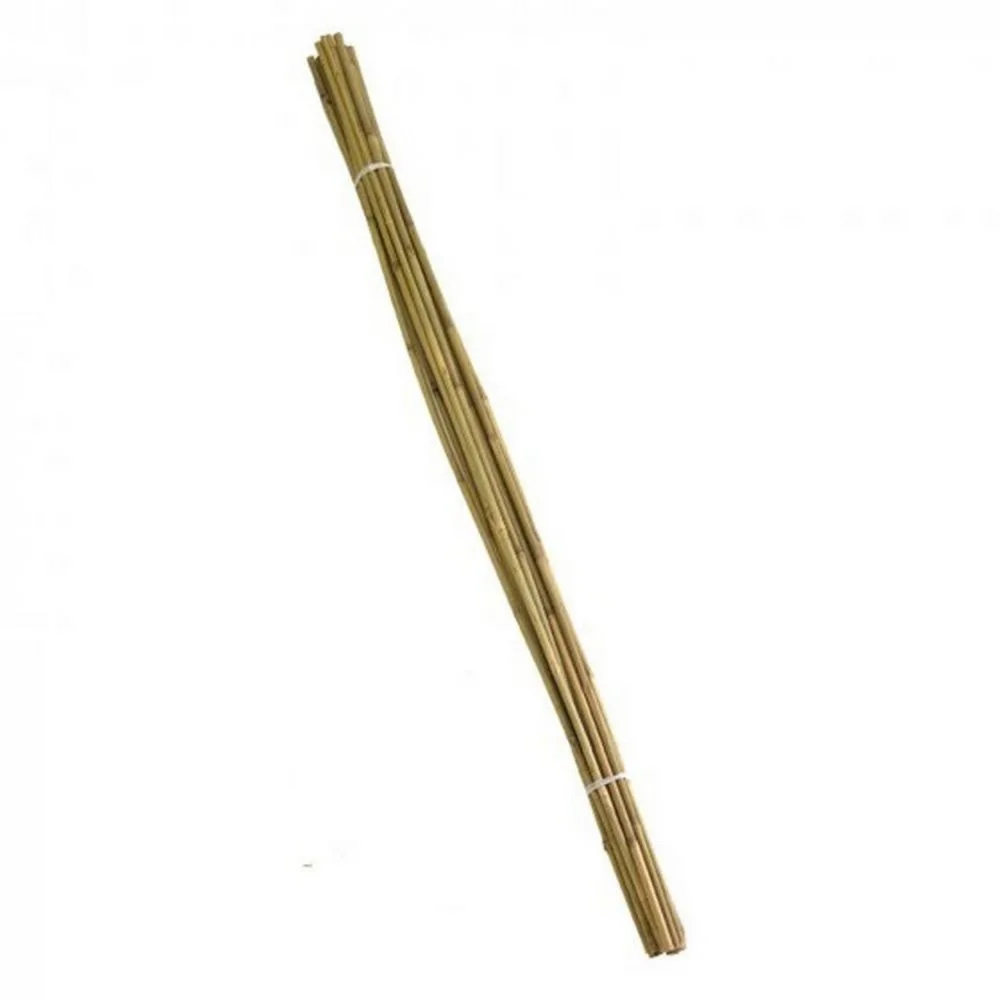
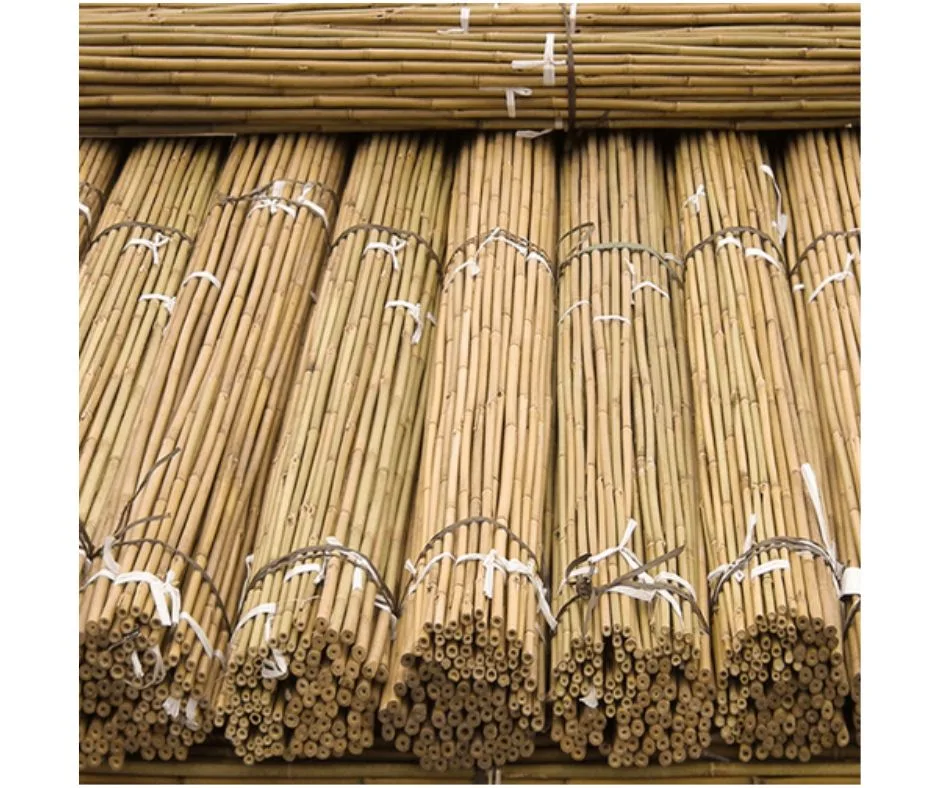
Bamboo canes come in standard lengths from 60cm up to 2.4m. Choose a cane roughly one-third taller than the plant's current height. That gives you room to keep adding ties as it grows.
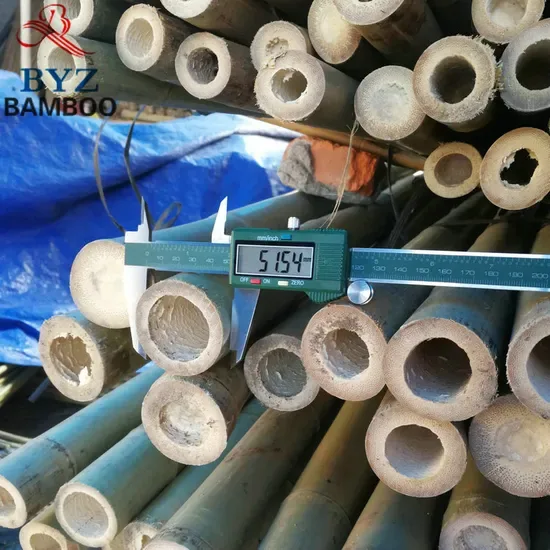
For heavy perennials like dahlias, use thicker canes in the 18-25mm diameter range. Slim 8-10mm canes suit lighter climbers like sweet peas and beans.
For tie materials, soft and biodegradable is the better choice for most plants. Jute garden twine is one of the most practical all-round options. It's strong enough to hold a heavy stem without cutting in, and it breaks down naturally at season's end.
Hemp twine performs similarly and holds up better in full sun.
Velcro plant ties are a strong secondary option. They loosen and readjust easily as stems thicken, which is exactly the flexibility that prevents mid-season girdling. As of 2026, they're available in widths from 5-12mm to suit different stem sizes.
For the full range of options, explore the garden twine range before buying.
Avoid wire twist ties and zip ties on living stems. Both are too rigid for soft herbaceous growth.
| Tie Material | Best For | Key Advantage |
|---|---|---|
| Soft jute twine | Most garden plants | Biodegradable, gentle on stems |
| Hemp twine | Sun-exposed positions | Better UV resistance |
| Natural raffia | Delicate seedlings | Softest stem contact |
| Velcro plant ties | Tomatoes, perennials | Easy to adjust mid-season |
| Rubber plant ties | Climbers, heavy stems | Flexible and reusable |
For vegetable plots, plant-safe natural fibres are the practical choice since they compost cleanly with the plant debris at season's end.
How to Secure a Plant to a Bamboo Cane: Step by Step
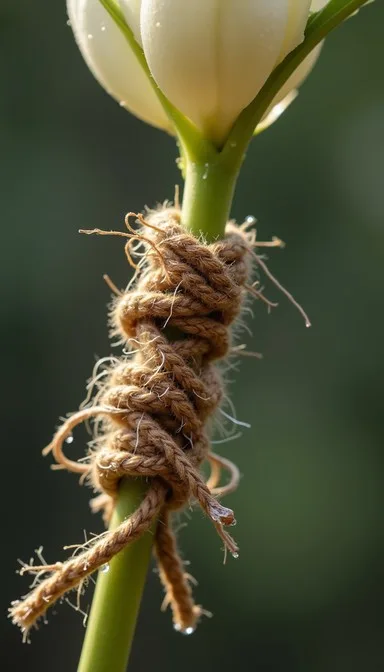
The figure-8 tie is the method used by professional growers and recommended by horticultural institutions for soft-stemmed plants. The crossed loop between cane and stem acts as a cushion, preventing the hard bamboo from rubbing directly against plant tissue.
Here's how to do it:
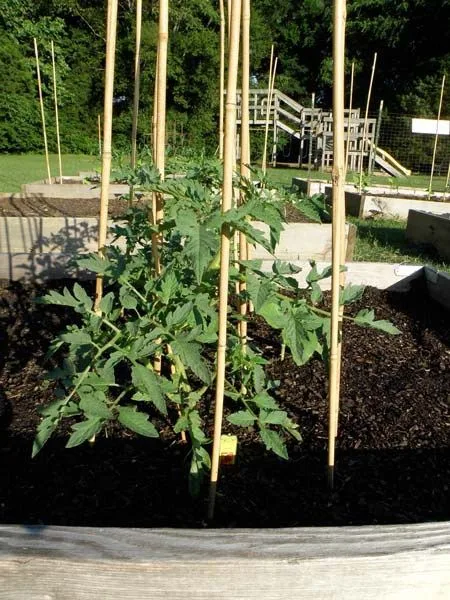
- Insert the cane at least 15-20cm into the soil, close to the plant but not through the root ball. In exposed or windy spots, go deeper.
- Cut your tie to around 30cm. That's enough to work with comfortably without excess.
- Loop the twine around the cane first. Bring both ends forward toward the stem.
- Cross the twine between cane and stem to form the figure-8 shape. This crossing is the critical step.
- Loop loosely around the stem and tie off with a simple knot. The knot should sit on the cane side, not pressed against the stem.
- Check the slack. Slip a finger between the tie and the stem. It should pass through easily.
The Figure-8 Tie: Why It Works Better Than a Basic Loop
A single loop presses the stem directly against the hard bamboo surface. Every time the plant moves in the wind, that contact point gets abraded. The figure-8's crossing loop prevents direct contact, so the stem moves freely without chafing.
It's a small detail with a significant impact on long-term plant health.
Getting the Tension, Height, and Number of Ties Right
The gap between stem and cane should be roughly a thumb's width, about 1-2cm. Too tight and the stem can't thicken. Too loose and the plant flops against the cane and bruises.
Tie height matters almost as much. Place the tie just below a leaf node, where the stem is naturally stronger. Tying mid-internodal (between nodes) gives less structural support and can cause the stem to bow at the tie point under load.
For most plants, one tie isn't enough. Use these as starting points:
- Short annuals under 60cm: 1 tie near the top third of the plant
- Medium perennials 60-120cm: 2 ties, spaced evenly along the stem
- Tall plants over 120cm (dahlias, delphiniums): 3 or more ties, the lowest placed about 25cm from the soil
Research from University of Minnesota Extension on vegetable crop support confirms that multiple tie points significantly reduce stem breakage in exposed sites. For tomatoes, add a new tie roughly every 20-25cm of new growth.
Check that your cane is secure before tying anything to it. A wobbly cane transfers wind stress directly to the stem. Push it deeper or angle it slightly into the prevailing wind for better stability.
Mistakes That Quietly Damage Plants
The most common mistake is tying too tight from the start. It feels secure, but a snug tie in May becomes a cutting tie by August. Use the thumb-gap test every time: if you can't slip a finger between the tie and the stem, loosen it.
Leaving ties in place without checking them is the second most common issue. Set a reminder to inspect every two to four weeks during the growing season. As stems thicken, even soft twine can constrict without showing obvious signs.
Using wire or cable ties on soft stems causes problems that often go unnoticed until the damage is done. Both cut through under load over time. For any actively growing herbaceous plant, use plant-safe natural twine or rubber ties instead.
Forgetting cane caps is a real safety issue. The Royal Society for the Prevention of Accidents (RoSPA) has documented eye injuries from unprotected cane tops in domestic gardens. Push a small plastic cap or an upturned yoghurt pot over every exposed cane end, particularly at face height.
One last easy-to-miss mistake: using a straight single loop instead of the figure-8. A straight loop leaves the stem resting against the cane surface. Repeated wind movement causes abrasion at that contact point and opens the door to fungal disease.
With heavy climbers or large dahlia stems, going up a twine grade also prevents the tie from cutting through under load.
How to Adjust and Maintain Ties Through the Growing Season
Once the ties are in, the work isn't finished. A plant that's growing well will outgrow its ties. Regular checks through the season catch most problems before they cause real damage.
When you check ties, look for two things: visible compression where the tie meets the stem, and any gap that's closed up completely. Either is a signal to re-tie. Don't try to force a tight tie looser by pulling it.
Cut it off and start fresh with the correct slack.
As plants grow vertically, add new tie points rather than shifting existing ones higher. A tie that's been moved loses its correct position relative to the leaf nodes below it. New tie, correct height, every time.
Toward the end of summer, some herbaceous plants become sturdy enough at the base to stand without a cane. If removing a lower tie makes no visible difference to the plant's posture, it no longer needs that point of support. You can take the cane out entirely once the stem holds itself.
At season's end, remove all ties before they rot against the stem tissue. Jute and raffia often break down on their own. For Velcro and rubber ties, rinse and store them dry for next year.
Bamboo canes are worth cleaning too. Wipe them down with a mild disinfectant solution before storing, to avoid carrying fungal spores into next season. Bundle them loosely and keep them off the ground.
Flat storage bends canes permanently.
Frequently Asked Questions
What is the best material to tie plants to bamboo canes?
Soft jute or hemp twine is the best all-round choice for most garden plants. Both are gentle on stems, strong enough to hold heavy growth, and biodegradable at season's end. For plants that need frequent adjusting (like tomatoes), Velcro plant ties are a close second.
Avoid wire and zip ties on soft-stemmed plants.
Can you use zip ties to secure plants to bamboo canes?
Zip ties are too rigid for soft-stemmed plants. They don't flex as the stem thickens, which means they can cut into vascular tissue quickly and cause girdling. For living stems, use jute twine, rubber ties, or Velcro plant ties instead.
How tight should a plant tie be?
Loose enough that you can slip a finger between the tie and the stem without any resistance. A thumb's width of space (roughly 1-2cm) is the target. If you can feel the tie gripping the stem at all, it's too tight.
Loosen it immediately and re-tie with correct slack.
How many tie points does a tall plant need?
Plants over 120cm tall generally need three or more tie points, with the lowest placed about 25cm from the soil. Add a new tie roughly every 30-40cm of height above that. For tomatoes and dahlias in exposed spots, tying every 20-25cm of new growth is more reliable.
When is the right time to stake a plant with bamboo canes?
Earlier than most people think. Dahlias benefit from staking at planting time, before shoots emerge. Sweet peas can be trained onto canes once they reach about 10cm tall.
For most other plants, stake before the stem shows any sign of flopping. Retrofitting a stake to a fallen stem risks root damage.
Similar Posts