Hemp Garden Twine: The Best Way to Support Your Plants
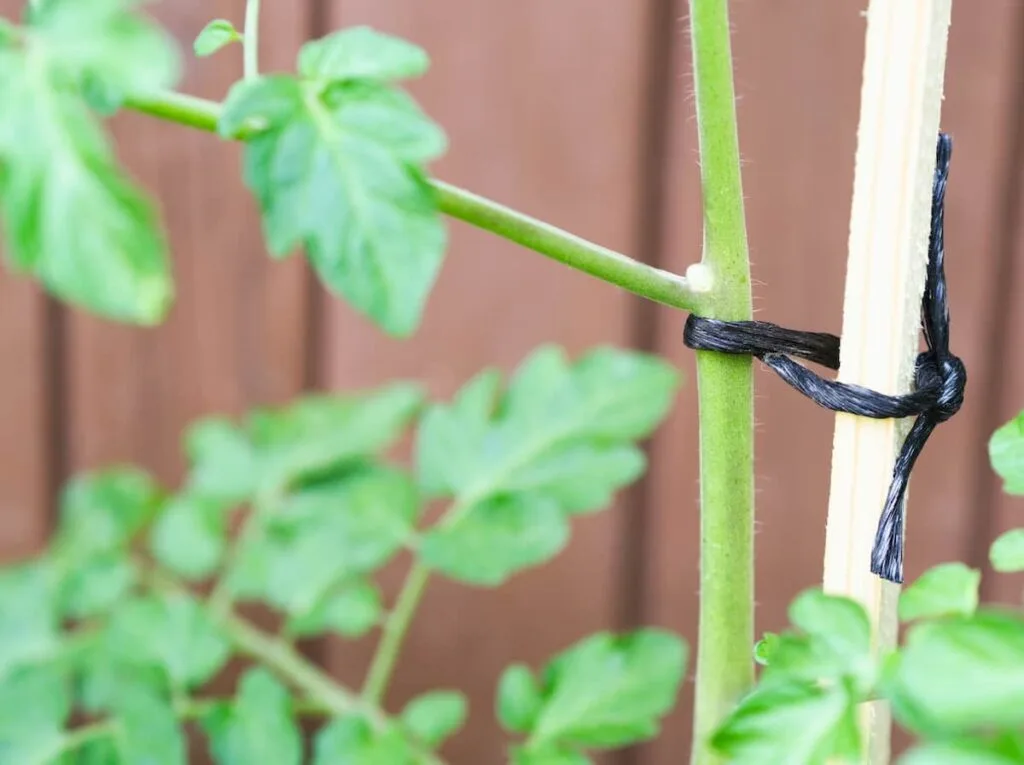
Growing food and flowers without reliable plant support means knocked-over stems, snapped branches, and a stressful mid-season rescue job. Hemp garden twine for plants has earned its reputation across UK allotments and US kitchen gardens. It's strong, fully biodegradable, and safe to compost with your plant waste at season end.
What catches buyers off guard is how much variation exists within hemp twine itself. Ply count, diameter, and construction type all affect real-world performance. As of 2026, a standard 3-ply hemp twine carries a breaking load of approximately 25 to 35 kg, while a 6-ply version reaches 50 to 70 kg.
Getting that right before you buy separates twine that lasts all season from one that fails in August.
Quick Answer: Is Hemp Twine the Right Choice for Your Garden?
Hemp garden twine is a strong, natural option for plant support. It outperforms jute in wet conditions. It lasts a full growing season outdoors.
Choose 3-ply for light climbers like peas and beans. Use 6-ply for tomatoes, cucumbers, or heavy-fruiting plants. It's fully compostable at season end.
Why Your Choice of Garden Twine Actually Matters
Most gardeners pick whatever twine is nearby and don't give it much thought. That's fine until a late-summer tomato plant is sagging under 2 to 3 kg of fruit. Then the twine starts cutting into the stem.
Wrong twine creates two distinct problems. A tie that's too thin concentrates load onto a small surface area and digs in over time. A tie that degrades too quickly leaves plants unsupported at their heaviest.
There's also the compost question. Synthetic twine, polypropylene being the most common, doesn't break down. If you compost plant waste with ties still attached, you're adding plastic fragments to your growing medium.
For organic growers, that's a real problem.
Getting it right comes down to four things: material type, ply count, construction, and how long you need the twine to last outdoors.
What Hemp Garden Twine Actually Is (and How It's Made)
Hemp garden twine is made from the long bast fibres of the Cannabis sativa plant. These fibres run along the outside of the stalk. They're extracted through retting, a process where stalks are soaked to separate usable fibre from the woody core.
The extracted fibres are spun into yarns and then twisted or braided together. More yarns means a higher ply count and a stronger product. A 3-ply twine uses three yarns.
A 6-ply uses six.
Raw hemp fibre has a tensile strength of roughly 550 to 900 MPa. By comparison, raw jute fibre measures approximately 200 to 450 MPa, according to data from the Food and Agriculture Organization of the United Nations. That strength advantage carries through directly into the finished twine.
Unbleached, untreated hemp is the cleanest option for garden use. Most garden-grade hemp twine is sold in its natural state, free from chemical softeners or bleaching agents. That makes it safe around edible crops and compatible with organic growing standards.
Ply, Diameter, and Breaking Load: How to Read Hemp Twine Specs
Most buyers skip the ply number and head straight for price. That's a mistake. Ply count is the single biggest factor in how much weight your twine can carry safely across a full growing season.
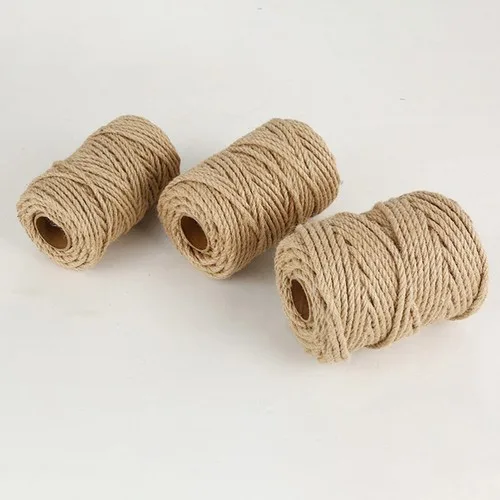
Here's a practical breakdown of the key specs:
| Ply | Approx. Diameter | Approx. Breaking Load | Best For |
|---|---|---|---|
| 3-ply | 1 to 1.5 mm | 25 to 35 kg | Peas, beans, sweet peas, light climbers |
| 6-ply | 2 to 2.5 mm | 50 to 70 kg | Tomatoes, cucumbers, tall flowers |
| 9-ply | ~3 mm | 80 to 100 kg | Heavy-fruiting plants, espalier training |
| 12-ply | 4 mm+ | 100 kg+ | Structural support, bundling |
These figures vary by manufacturer. Aggregate product data and verified buyer feedback indicate real-world breaking loads can run 10 to 15% higher or lower depending on the brand.
Twisted vs Braided Hemp: Which Construction Holds Better?
Twisted hemp is the most common type. The yarns spiral around each other. When you tie a knot, that twist structure helps it grip rather than loosen under load.
Braided hemp interlocks yarns in a crosshatch pattern. It's smoother and lies flatter against a stem, which reduces pressure on soft or young growth. It typically costs a small premium over twisted hemp.
For general garden use, twisted 3-ply or 6-ply covers most situations. If you're growing dahlias, sweet peas, or anything with a delicate stem, braided hemp is worth the extra cost per metre.
Hemp Twine vs Jute Twine: The Comparison Most Gardeners Get Wrong
Jute and hemp look almost identical on the shelf. Both are natural, brown, and sold in similar roll sizes. Many garden centres stock jute while labelling it vaguely as "natural garden twine." That's where the confusion starts.
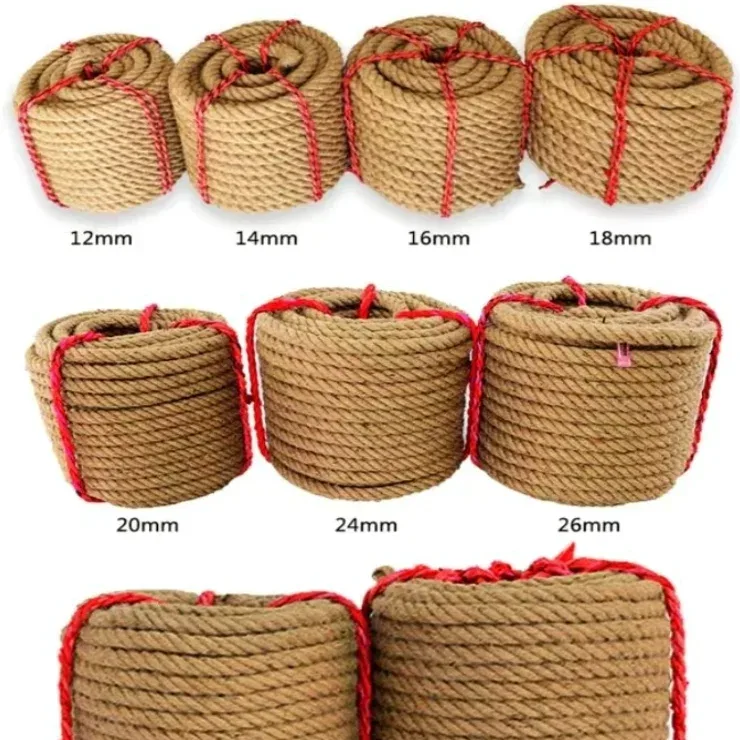
The real difference shows up in wet weather. Jute absorbs moisture readily, causing it to swell, weaken, and rot mid-season. In a dry summer that's rarely a problem.
In a typical UK growing season with persistent rain through June and July, jute can fail before your tomatoes reach harvest.
Hemp handles moisture significantly better. Its fibre structure resists rot more effectively, giving it a longer useful outdoor lifespan. The Royal Horticultural Society notes in its plant support guidance that material choice matters most in late summer, when plants are at peak weight and most vulnerable to tie failure.
Aggregate reviews from UK allotment gardeners consistently report that hemp outlasts jute by four to six weeks in wet growing seasons. That gap is meaningful when you're trying to carry crops through to late September.
| Property | Hemp Twine | Jute Twine |
|---|---|---|
| Tensile strength | Higher | Lower |
| Moisture resistance | Good | Poor |
| Wet-season durability | Full season | Variable |
| Biodegradable | Yes | Yes |
| Compostable | Yes | Yes |
| Typical price per roll | Slightly higher | Slightly lower |
If your garden sees regular rain, hemp is the smarter investment. The price difference is small enough to justify on the first roll you don't have to replace mid-season. You'll find more plant care advice across our gardening guides.
Jute works well in drier climates or for short-season crops where it won't face extended wet exposure. But as an all-round choice for a full UK or northern US growing season, hemp wins clearly.
Hemp vs Sisal, Cotton, Raffia, and Synthetic Twines
Jute is the most discussed alternative to hemp, but it's not the only one. Sisal, cotton, raffia, and polypropylene all appear in garden centres and hardware stores. Each has a distinct use case and meaningful limitations.
Sisal comes from agave fibre. It's coarser and tougher than hemp, making it less suitable for soft stems but useful for structural tasks like bundling canes or securing heavy branches. It degrades more slowly in soil than hemp.
Cotton is the gentlest option. It's soft enough for seedlings and young growth but lacks the tensile strength for heavy-fruiting crops. It also degrades quickly, which can be a problem across a long growing season.
Raffia is a flat, ribbon-like material from palm leaves. It's traditionally used for grafting and very light tying. Tensile strength is low, and it performs poorly in sustained wet conditions.
Polypropylene is the strongest and most durable synthetic option. It holds heavy loads all season without degrading. The trade-off: it can't be composted, introduces plastic into your growing space, and concentrates pressure on stems if tied too tightly.
| Material | Strength | Wet Resistance | Biodegradable | Best For |
|---|---|---|---|---|
| Hemp | High | Good | Yes | General garden use, tomatoes, climbers |
| Jute | Medium | Poor | Yes | Dry climates, short-season crops |
| Sisal | Medium-high | Moderate | Yes | Structural bundling, heavy canes |
| Cotton | Low | Poor | Yes | Seedlings, delicate stems |
| Raffia | Low-medium | Poor | Yes | Grafting, light tying |
| Polypropylene | Very high | Excellent | No | Heavy-duty structural support only |
For most kitchen garden and allotment use, hemp covers the full range better than any single alternative. Strength, stem safety, and biodegradability rarely coexist this well in one material.
Matching Hemp Twine Thickness to Your Plants
Ply choice isn't only about maximum load capacity. It's about proportion too. A 9-ply cord on a sweet pea stem is unnecessary and creates excess bulk at the knot.
A 3-ply on a loaded tomato truss is underpowered. Match the twine to the plant's realistic end-of-season weight.
Light Support: Peas, Beans, and Delicate Climbers
3-ply is the right call for peas, runner beans, sweet peas, and morning glories. These plants are lightweight, and their stems are relatively fine. Thinner twine also produces smaller knots that tie more cleanly around cane wigwams and narrow wire trellises.
Medium Support: Tomatoes, Cucumbers, and Tall Flowers
6-ply is the workhorse ply for most vegetable garden crops. Tomatoes, cucumbers, dahlias, and tall sunflowers all fall here. These plants carry meaningful weight by late summer, and 6-ply provides the load capacity they need without creating pressure points on maturing stems.
Heavy Support: Fruit-Laden Stems, Espalier, and Structural Ties
9-ply or 12-ply suits situations where plants are exceptionally heavy or where the twine spans a long horizontal run. Espalier fruit tree training, securing rose canes to a wall, or bundling over-wintered plants for protection all justify the heavier ply.
How to Tie Plants Without Cutting Into the Stem
The figure-eight knot is the right technique for almost every plant tie situation. You loop the twine around the stake first, cross it over, then loop it loosely around the stem. That crossing point acts as a buffer, preventing the stem from pressing directly against the support.
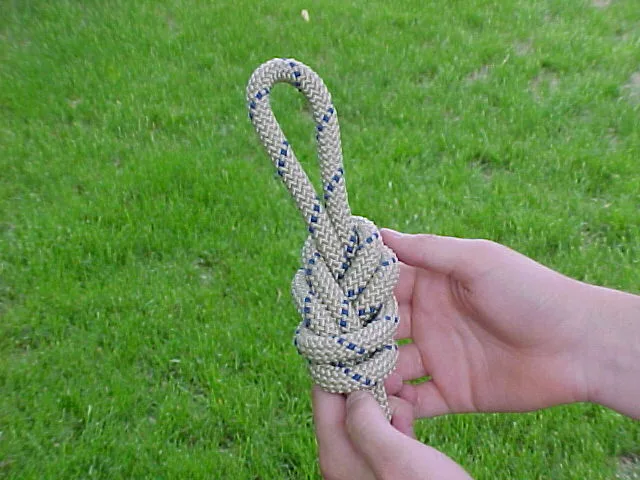
Tension is where most gardeners go wrong. The tie should be snug enough to stop the stem flopping but loose enough to slide a finger underneath. A tie that fits well in June will be cutting in by August if you don't revisit it.
For indeterminate tomatoes and tall climbers, add a new tie every 20 to 25 cm as the plant extends. Don't wait until it's already leaning. Preventative tying is faster and less damaging than reactive tying.
Avoid placing ties at nodes or leaf junctions where the stem is already under lateral stress.
Mistakes That Damage Plants or Waste Twine
Using too thin a ply for the plant's eventual weight. A 3-ply carrying a fully loaded tomato truss will stretch and snap. Size for maximum expected weight, not current weight.
Tying too tightly. Hemp has minimal stretch once set. Leave enough slack to account for stem swelling and growth through the season.
Buying unlabelled "natural twine" without checking the fibre. Verified buyer feedback consistently shows that generic "natural" twine is often a jute blend with significantly lower wet-weather performance than true hemp.
Leaving ties on past the growing season. Hemp left on perennials through winter will rot and bond to the stem. Strip ties as part of your end-of-season clear-up.
Composting synthetic ties with plant waste. Polypropylene fragments persist in finished compost. Remove any non-natural ties before adding plant material to the heap.
Tying at nodes or branch junctions. These points are already structurally stressed. Tie along clear sections of stem where there's room for the knot to sit without pressing against a growth point.
Hemp Twine Pricing: What a Good Roll Actually Costs
Hemp twine carries a small but consistent premium over jute. In the UK, a 100 m roll of 3-ply hemp typically retails between £4 and £8 depending on brand and retail channel. A 6-ply 100 m roll runs from around £6 to £12.
US pricing is broadly comparable. A 100 m (approximately 328 ft) roll of garden-grade 3-ply hemp generally costs $5 to $10. The higher end of that range often reflects organic certification or specialty retail markup rather than meaningfully better fibre quality.
Larger rolls offer better value. A 150 m or 200 m spool typically costs 20 to 35% less per metre than the same brand's 50 m option. For gardeners growing multiple tomato plants, climbing beans, and tall flowers each season, the bigger spool pays for itself quickly.
Avoid very cheap "hemp-look" twine priced well below the market range. Aggregate buyer feedback consistently flags these as jute blends or low-grade twisted fibre that performs far closer to cheap jute than genuine hemp in wet conditions.
End-of-Season Removal, Composting, and Storage
Strip all ties at the end of the growing season when clearing plant debris. Untreated hemp twine can go straight into the compost heap alongside plant material. It breaks down within two to six months in an active compost pile.
Don't leave hemp ties on perennials over winter. Twine that's been outdoors all season becomes brittle and prone to rotting. It can bond to the stem surface and cause damage when you try to remove it the following spring.
Unused twine from the current season stores well in a cool, dry place away from direct light. UV exposure degrades natural fibre even off the plant. A sealed container or a dark shelf in a dry shed keeps the remaining roll usable through the following year.
Frequently Asked Questions
How long does hemp twine last outdoors?
Well-made 3-ply or 6-ply hemp twine typically lasts four to six months in a standard UK outdoor season. In drier US climates, it often holds for seven to eight months. Wet, humid conditions accelerate degradation.
Buying from a reputable supplier helps ensure consistent fibre quality and a reliable outdoor lifespan.
Can I compost hemp garden twine?
Yes, untreated hemp twine is fully compostable. It breaks down in two to six months in an active compost pile. Check that your twine is unbleached and additive-free before composting.
Treated or dyed twine may contain residues that slow decomposition or introduce unwanted compounds into finished compost.
Is hemp twine safe to use around edible plants?
Unbleached, untreated hemp twine is safe for use around edible crops. It contains no synthetic coatings, plasticisers, or chemical softeners. If you're growing to an organic standard, look for Soil Association or USDA Organic certification, which confirms the fibre was produced without synthetic pesticides or treatments.
What's the difference between hemp garden twine and regular garden string?
"Garden string" is a generic term covering jute, cotton, sisal, hemp, and synthetic blends. It tells you nothing about the actual material. Hemp twine is a specific natural fibre product with defined tensile strength and biodegradability.
Always check the fibre type on the label before buying rather than relying on the product name.
Which ply is best for tomatoes?
6-ply is the right choice for most tomato varieties. Indeterminate (cordon) types carrying multiple trusses can reach 2 to 3 kg of fruit by late summer. 6-ply provides a comfortable safety margin at that load. For especially large-fruiting varieties, 9-ply is worth considering.
Final Verdict: When Hemp Twine Wins and When Another Option Is Smarter
Hemp wins clearly for most kitchen garden and allotment use. It's the strongest biodegradable natural twine available. It handles wet conditions better than jute and composts cleanly at season end.
For tomatoes, cucumbers, tall flowers, and climbing crops, it's the most reliable all-round choice.
The exceptions are narrow. Cotton or braided hemp suits very delicate seedlings where even 3-ply twisted twine creates too much friction. Polypropylene makes sense only for structural applications where longevity matters more than sustainability.
For dry-climate gardeners running short-season crops, jute remains a cheaper and perfectly adequate option. But if you're in the UK or anywhere with an unpredictable growing season, hemp is the one that won't let you down when everything is at peak weight and the rain hasn't stopped for a fortnight.

Similar Posts




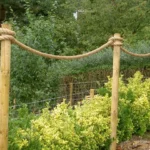
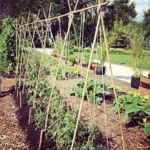
[…] is the traditional choice. It shares the natural fibre warmth you'd find in thicker hemp-based garden rope products, and it weathers to an attractive silver-grey. For a rustic or period garden, it's […]
[…] hoops every 60 to 90cm to prevent mid-span sagging. For lashing frame intersections together, plant-compatible hemp cord holds the structure stable in exposed gardens. For a wider choice of tying materials, the garden […]
[…] use plant-safe ties. Natural plant cordage won't abrade bark or harm resting caterpillars. Both hemp-based plant ties and jute-fibre ties break down naturally if left outdoors through the […]
[…] your stake is in the ground, plant-safe natural cordage keeps stems secured without damaging soft […]
[…] for permanent soft fruit bushes. Net the sides and top as separate panels. Attach panel joins with biodegradable plant cord rather than plastic clips that crack and fail under UV […]
[…] bamboo reliably, won't cut into plant stems, and breaks down naturally at season's end. A plant-safe hemp option works equally well with slightly more tensile […]
[…] Hemp twine is worth considering for heavier-load or exposed setups. […]
[…] grid is the budget option. Horizontal and vertical runs of cord from natural plant-safe fibres are tied between uprights to form a grid. It's slower to build than purpose-made netting but […]
[…] a fence meant to last, thicker-gauge hemp rope in 10 mm or 16 mm diameter is the most reliable starting point. For seasonal borders or a temporary […]
[…] is durable, naturally rot-resistant, and sustainably sourced. If you're running natural cordage near food crops or working in an eco-conscious garden, hemp is a strong candidate. For structural fence rope, […]