How to Build a Netting Frame for Your Vegetable Garden
Founder & Lead Horticulturist at Gardener Expert · RHS Master of Horticulture, Certified Professional Horticulturist (CPH) · 16+ years in residential organic gardening, plant propagation, and structural plant training
Knowing how to make a netting frame for vegetables is one of those garden skills that pays back every season. A loose drape of bird netting looks like it should work. But it sags onto leaves, creates contact points for caterpillars, and leaves base gaps that butterflies slip through with ease.
A proper frame changes all of that.
The Royal Horticultural Society recommends insect-exclusion mesh with a maximum 1.3mm aperture for effective cabbage white butterfly control. That mesh only works when held clear of the plant canopy. With a few lengths of ½-inch PVC pipe, some rebar stakes, and the right netting, you can build a frame that holds its shape all season.
Quick Answer
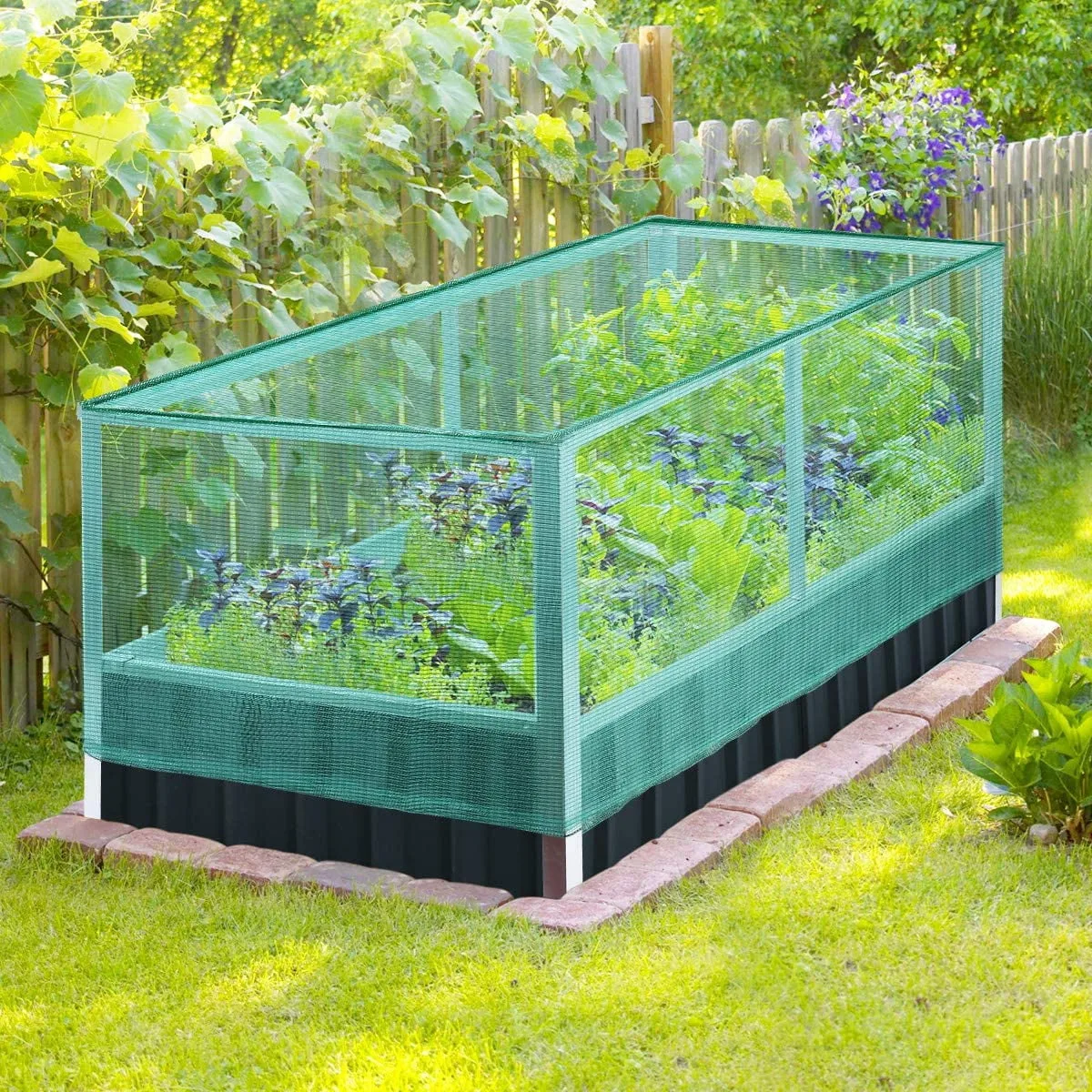
To make a netting frame for vegetables, start with rebar stakes. Push stakes every 60 to 90cm along each long side of the bed. Bend ½-inch PVC pipes over the stakes to form hoops.
Run a ridge pole along the top of all the hoops. Drape insect mesh over the frame and peg the edges firmly to the ground.
Why a Netting Frame Beats Just Draping Net Over Your Plants
Many gardeners start with a loose drape of netting. They throw it over their brassicas, weight the edges with bricks, and assume that's enough. It almost never is.
Loose netting sags down onto leaf surfaces. That contact point is exactly what a caterpillar needs to chew through, or to reach foliage from the outside. Even a small base gap is all a cabbage white butterfly needs to walk under and lay eggs on your stems.
A rigid frame holds the netting above the plant canopy, removing contact points entirely. It also creates a defined perimeter you can peg tightly to the ground, closing every edge gap.
Access matters too. With loose netting, every watering or harvest session means lifting and rearranging the whole cover. A frame lets you fold back one end, step in, and re-seal it without disturbing anything else.
Hoop tunnel or flat-panel frame: which is better?
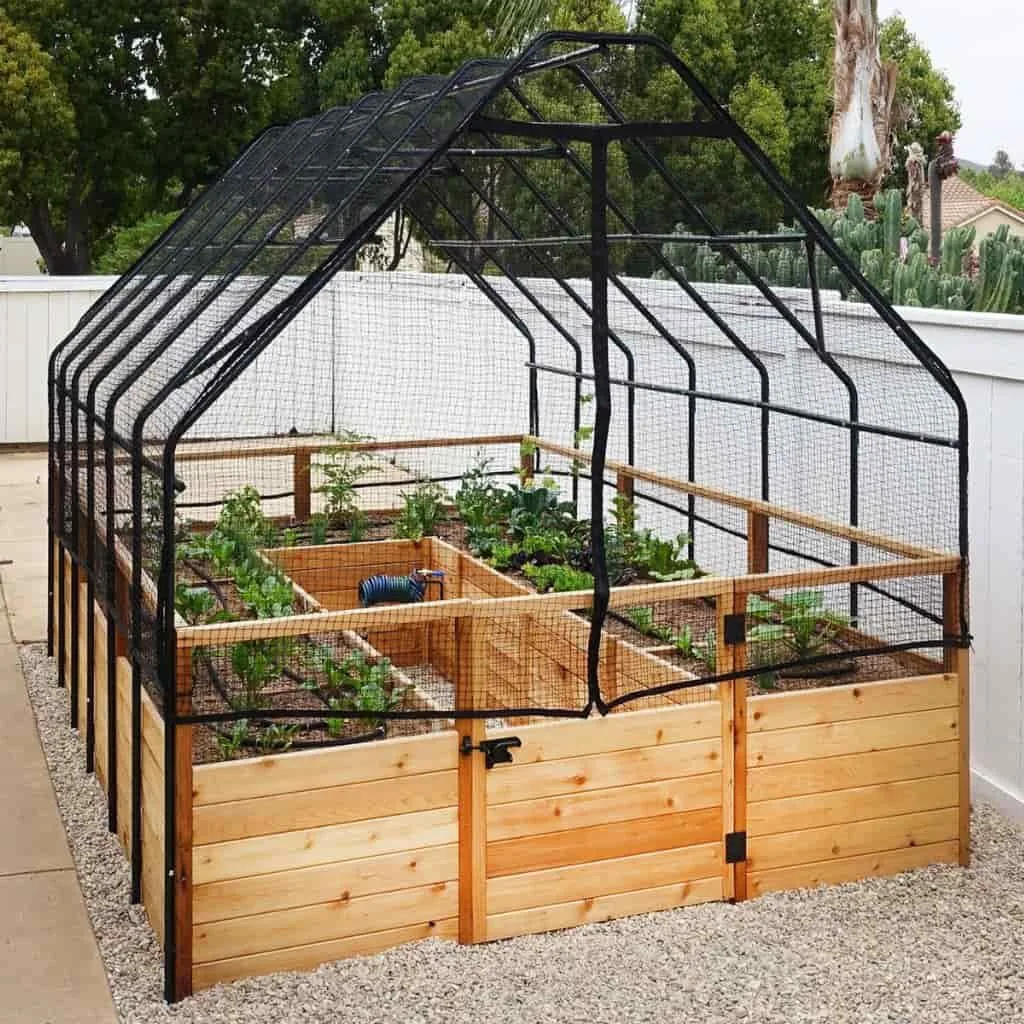
A hoop tunnel is better for most home gardeners. It's cheaper, faster to build, and adapts to any bed length. Flat-panel timber frames are more rigid and handle heavy rainfall or snow loading better, but they take more time and materials to build.
For most vegetable beds, the hoop tunnel is the right starting point. You can lash the ridge pole to each hoop apex using a few wraps of sturdy cordage rather than plastic fittings, which is faster and just as secure.
What You Need: Materials, Tools, and Sizes Before You Start
The materials for a basic PVC hoop frame are simple and available at most hardware or garden centres. As of 2026, a complete single-bed build typically costs between £26 and £52 in the UK, or $32 to $65 in the US, depending on netting grade.
Here's what you need for a standard 1.2m x 2.4m raised bed:
| Material | Spec | Quantity |
|---|---|---|
| PVC pipe | ½ inch (15mm) diameter | 4 to 5 lengths, each 1.5 to 1.8m |
| Rebar stakes | 30 to 45cm length | 8 to 10 stakes |
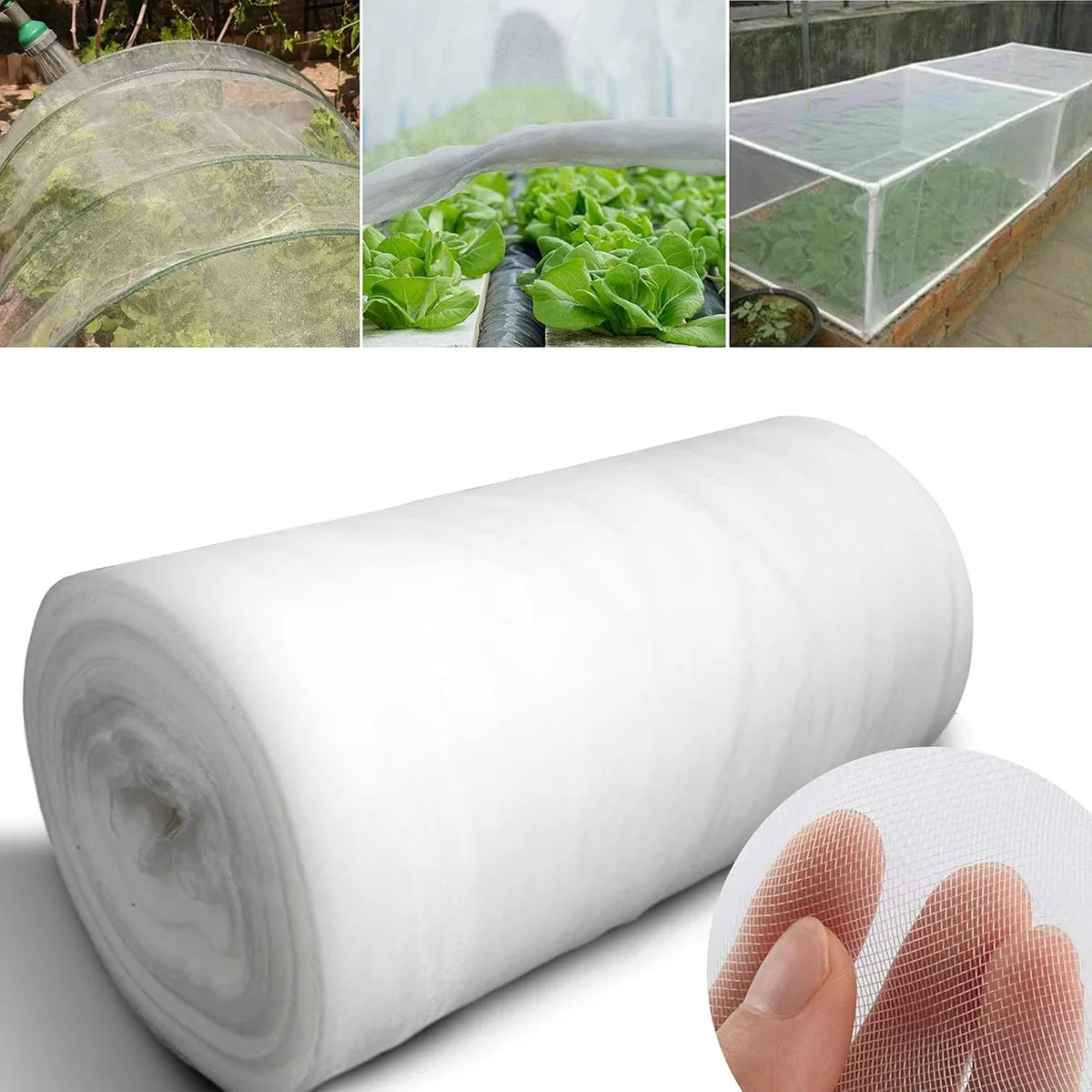
| Insect mesh or bird netting | Mesh size depends on target pest | 1 roll, cut with 60cm total overhang |
| Hoop clips or cable ties | Outdoor-rated | 10 to 15 |
| Ridge pole | Bamboo, timber batten, or PVC pipe | 1 length equal to bed length |
| Ground pegs or bricks | For base anchoring | 6 to 10 |
For tools, you need a hacksaw or pipe cutter, a tape measure, and a mallet. Nothing else.
If your bed is wider than 1.2m, step up to ¾-inch PVC pipe so hoops don't flex inward under netting weight. For beds longer than 3m, add an extra hoop at the midpoint to prevent mid-span sagging.
How to Build a PVC Hoop Netting Frame, Step by Step
The full build takes 30 to 45 minutes for a single raised bed. No power tools required.
Setting Up Hoops, Stakes, and the Ridge Pole
- Drive rebar stakes into the ground at 60 to 90cm intervals along both long sides of the bed. Leave 20 to 25cm of stake above the soil.
- Cut PVC pipe to length. For a 1.2m-wide bed, a 1.8m pipe gives a comfortable arc height of around 60cm.
- Slot one end of each pipe over a rebar stake. Bend the pipe gently into an arc and push the opposite end over the matching stake on the other side.
- Lay the ridge pole along the top of all hoop apexes, running the full bed length. Secure it at each hoop with a clip or a few wraps of hemp cord.
Draping, Tensioning, and Securing the Net at the Base
- Drape the netting centrally over the ridge pole. Let it fall evenly down both sides with at least 30cm of overhang at each end.
- Clip or tie the netting to each hoop so it can't shift in wind.
- Peg the base all the way around. Alternatively, fold the overhang under a timber batten weighted with bricks or screwed into the bed frame.
After the first windy day, re-check the base perimeter. Hoops can shift slightly, opening small gaps where the net meets the ground.
Choosing the Right Netting for Your Specific Pest Problem
Mesh size is the most important decision you'll make when building this frame. Get it wrong and the frame provides no real protection.
| Pest | Mesh Size Needed | Netting Type |
|---|---|---|
| Cabbage white butterfly | 1.3mm or smaller | Fine insect exclusion mesh |
| Carrot fly | 1.3mm or smaller | Fine insect exclusion mesh |
| Aphids / whitefly | 0.8mm or smaller | Ultra-fine anti-insect mesh |
| Pigeons / sparrows | 7 to 19mm | Standard woven bird netting |
| Rabbits | Rigid wire mesh preferred | Welded or hex wire mesh |
Standard green bird netting sits at 7mm or more. It'll stop pigeons, but it won't stop cabbage white butterflies or carrot fly. If brassicas or root vegetables are your priority, you need fine insect exclusion mesh at 1.3mm aperture or below.
Fine mesh cuts light transmission by around 10 to 15% compared to open air. According to the RHS, this is rarely significant enough to affect yield on cool-season crops like brassicas or kale. For summer crops that need full sun, it's worth factoring in.
Fine mesh also blocks pollinators. If you're growing squash, courgettes, or beans inside the frame, lift the netting during flowering. You can use plant-tying fibre to bundle the net back neatly each morning until fruit set is complete.
Mistakes That Let Pests In Anyway
Even a well-built frame fails when these errors go unnoticed.
Leaving gaps at the base. This is the most common failure point. Netting that hangs loose at the soil line lets cabbage white butterflies walk underneath and lay eggs directly on stems. Peg, bury, or batten every edge.
Pay extra attention to corners.
Using the wrong mesh size. Standard bird netting at 7mm is an open window for butterflies and carrot fly. Use the table in the previous section to match mesh aperture to your specific target pest.
Skipping the ridge pole. Without a central spine, PVC hoops flex inward under netting tension and wet weather. The net presses onto the canopy and defeats the purpose. A ridge pole keeps the frame's shape through the whole season.
Leaving the cover on during flowering. Fine mesh blocks pollinators just as effectively as it blocks pests. Check weekly once flowers appear and lift the netting while blooms are open.
Using standard cable ties in cold climates. They become brittle below freezing and snap under tension. For year-round frames, use frost-rated natural cordage or purpose-made hoop clips designed for outdoor use.
Leave a bit of slack in the netting at the top too. Plants keep growing, and a net pulled drum-tight will press into foliage as the season progresses.
What It Costs and How Long It Lasts
A PVC hoop frame is one of the cheapest physical pest barriers available. Here's what you can expect to spend on a single raised bed:
| Component | Typical Cost (UK) | Typical Cost (US) |
|---|---|---|
| ½-inch PVC pipe (x4 lengths) | £8 to £14 | $10 to $18 |
| Rebar stakes (x10) | £5 to £10 | $6 to $12 |
| Fine insect mesh (5m roll) | £10 to £20 | $12 to $25 |
| Ridge pole and clips | £3 to £8 | $4 to $10 |
| Total single-bed build | £26 to £52 | $32 to $65 |
Pre-made cloche kits and pop-up tunnel frames cost two to three times more. They're worth considering if you need something assembled fast, but most don't size cleanly to existing raised beds.
UV-stabilised woven polyethylene netting lasts five to ten years with proper care. Fold it loosely at the end of each season and store it tied with a length of garden twine rather than forced into a bag. That habit alone extends its usable life by several seasons.
PVC pipe holds up well outdoors but can become brittle after several years of direct sun exposure. Individual hoops are cheap and easy to swap out. Rebar stakes last a decade or more in most soils before rust becomes a structural concern.
Frequently Asked Questions
What size PVC pipe works best for a vegetable netting frame?
Half-inch (15mm) PVC pipe is the standard for most home vegetable beds. It bends easily into hoops without cracking and holds its arc shape through a full season. For beds wider than 1.2m, step up to ¾-inch pipe.
The extra rigidity prevents inward flex under netting tension and wet-weather loading.
Can I use bamboo canes instead of PVC pipe?
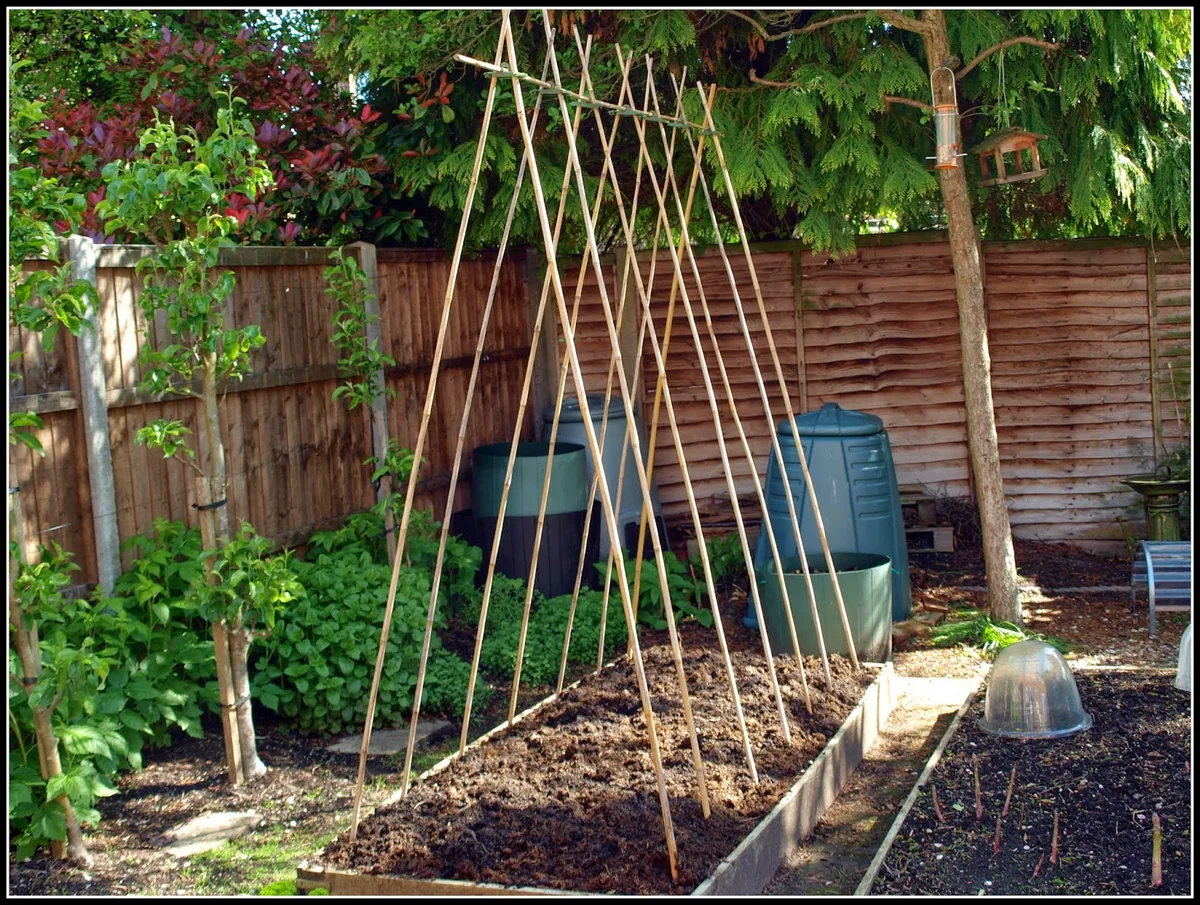
Bamboo works for lightweight frames on small beds, but it doesn't bend into smooth arcs. It's better suited to flat-panel or A-frame designs. The main limitation is lifespan: bamboo typically lasts two to three seasons before splitting or rotting at the soil contact point.
How do I stop the frame from blowing over in wind?
Drive rebar stakes at least 20 to 25cm into the ground before slotting the PVC pipe over them. Add ground pegs around the full netting perimeter. A properly secured ridge pole also helps by distributing wind load across all the hoops rather than concentrating it at one or two points.
How often should I replace the netting?
UV-stabilised insect mesh typically lasts five to ten years with careful off-season storage. Signs it needs replacing include visible tears, fraying edges, or mesh holes that have stretched past their rated aperture. Hold the net up to bright light to catch small damage before the new season starts.
Does a small raised bed really need a frame, or will loose netting do?
Even small beds need a frame. A loose drape still leaves base gaps where pests enter freely. A mini hoop frame built from two or three short hoops assembles in under ten minutes and gives proper full-perimeter coverage.
Pest pressure on brassicas and root crops is the same regardless of bed size.
Similar Posts