Best Bamboo Canes for Runner Beans: Size & Spacing Guide
Founder & Lead Horticulturist at Gardener Expert · RHS Master of Horticulture, Certified Professional Horticulturist (CPH) · 16+ years in residential organic gardening, plant propagation, and structural plant training
Knowing what bamboo canes to use for runner beans can mean the difference between a bumper harvest and a collapsed frame in August. Runner beans are vigorous, heavy climbers. They don't behave like peas or sweet peas, and the canes that work fine for lighter crops simply aren't up to the job.
Most growers underestimate both height and gauge. Runner beans routinely reach 8 to 10 feet in a productive season, yet the most popular garden cane sold is 6 feet long. Get either spec wrong and you're rebuilding mid-season.
The sections below break down every choice so you can pick the right cane before a single pole goes in the ground.
The Short Answer: What Most Growers Get Wrong About Runner Bean Canes
For runner beans, use bamboo canes at least 8 feet tall. Use a gauge of 10mm at minimum. A 12mm cane handles crop load more reliably.
Choose natural, untreated bamboo near food crops. Tie every crossing point firmly before planting begins.
Most growers reach for 6-foot canes out of habit. It's the most common size on the shelf, and it works perfectly well for dozens of other crops. Runner beans are a different problem entirely.
A 6-foot cane pushed 8 inches into the ground leaves about 64 inches of usable support. Runner beans hit that ceiling by mid-July in a productive season. Once the plant runs out of support, it flops.
That puts lateral strain on the cane and, across a row structure, can bring the whole frame down.
Gauge is the second underestimated variable. Thin 8mm canes handle peas and sweet peas comfortably. Runner beans carry a far heavier load.
Aggregate product reviews consistently flag bowing and snapping at 8mm specifically with bean crops. Go heavier from the start.
Height and Gauge: The Two Specs That Determine Whether Your Structure Stands
Height and diameter are the two numbers that decide whether your structure stands through harvest. Everything else is secondary.
Height
Runner beans are among the most vigorous climbers in the kitchen garden. They routinely reach 8 to 10 feet in a good growing season. A 6-foot cane, once inserted, gives you barely more than 5 feet of working height.
Use 8-foot canes as your baseline. On sheltered plots, that's sufficient. For exposed sites or taller-growing varieties, 10-foot canes give you room to grow without pinching out plants prematurely.
Gauge
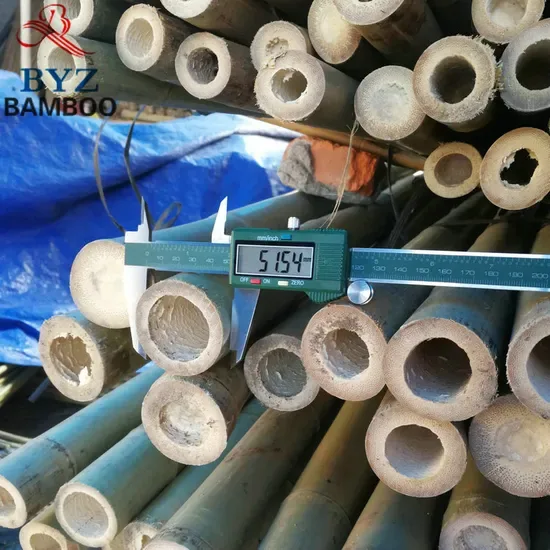
Gauge is the cane's outer diameter. It's the most overlooked figure on the product label and the most consequential one for runner beans.
| Gauge | Suitable for | Runner beans? |
|---|---|---|
| 8mm | Peas, sweet peas | No |
| 10mm | Moderate climbers, sheltered sites | Minimum |
| 12mm | Runner beans, exposed plots | Yes, recommended |
| 14mm+ | Heavy-duty frames | Yes, overkill for most |
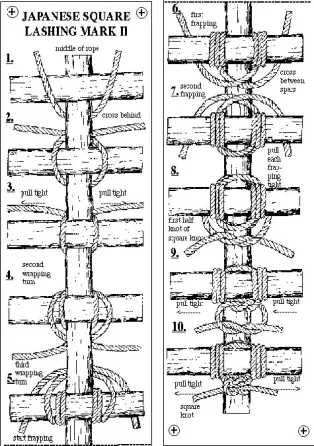
Manufacturer specifications confirm 10mm as a functional minimum on sheltered ground. On any exposed allotment or garden, 12mm is the practical choice. Always lash junction points with cord that won't stretch under load.
The cane is only as strong as its weakest connection.
Your Options Compared: Height, Gauge, and Finish Broken Down
With your spec floor set at 8-foot, 10-to-12mm canes, three choices remain: finish, quality, and pack size.
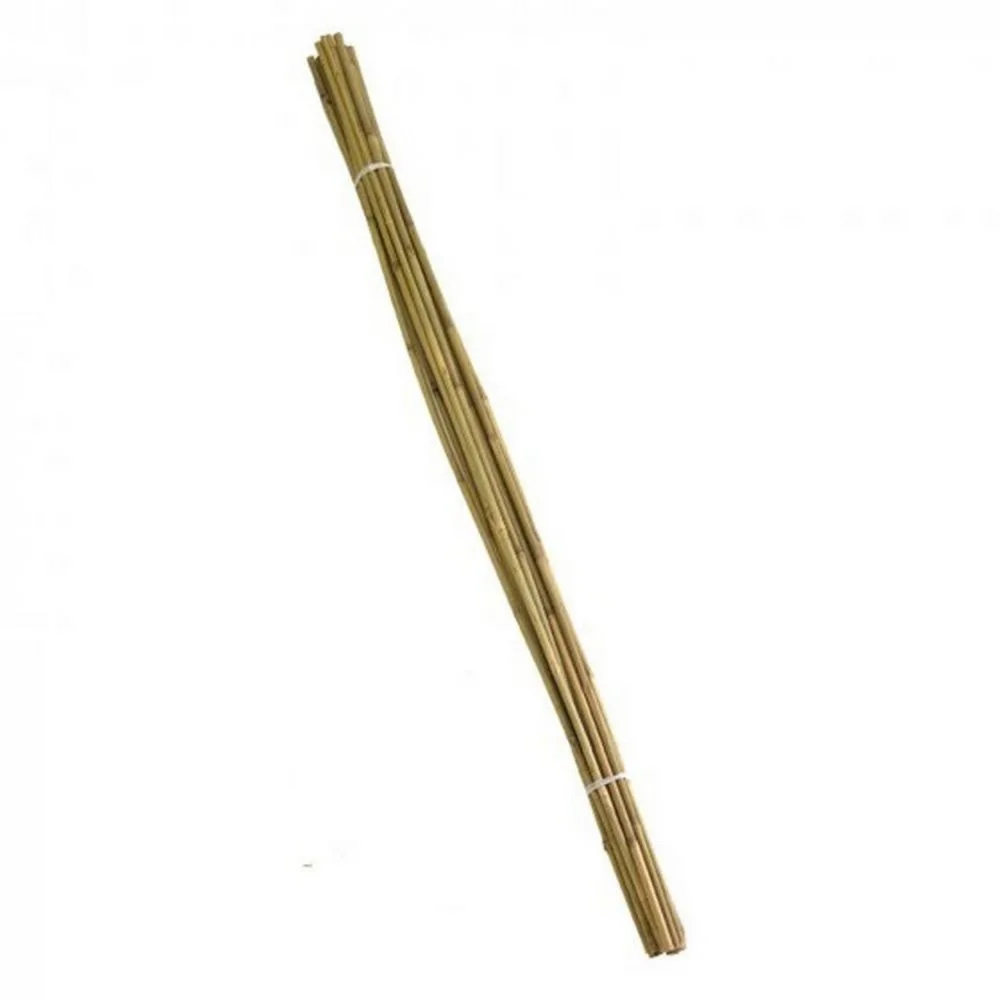
Natural (untreated) bamboo
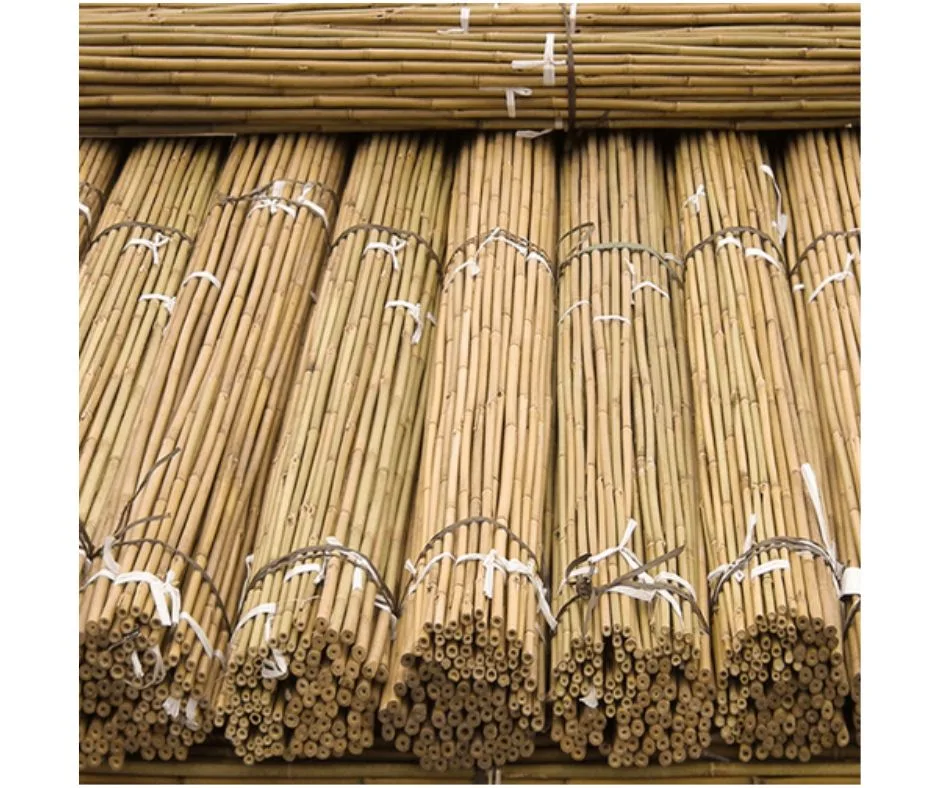
Natural canes are uncoated and a golden-brown colour when dry. They're the right choice for food crops. No lacquer or chemical coating means zero contact risk near edible pods.
They weather to grey after a season or two, but that's cosmetic, not structural.
Green-dyed and lacquered canes
Green canes are tidier in a formal kitchen garden or potager. The coating slows surface weathering slightly. For a practical allotment, natural bamboo performs identically.
The choice here is aesthetic, not functional.
Bundle quality and pack size
For a 10-plant double row, you need a minimum of 14 canes: 12 uprights and 2 horizontal bracing canes. A pack of 20 gives you useful spares for the inevitable mid-season snap.
The quality problem with budget packs is inconsistent sizing. A "10mm" bundle often contains canes ranging from 8mm to 11mm. Buy from a supplier that states a minimum gauge, not just a nominal one.
As of 2026, aggregate buyer reviews confirm this is a recurring complaint across budget-tier garden cane products.
Pair any cane setup with plant-safe natural twine for tying crossing points without cutting into the bamboo through summer.
Wigwam vs. Double-Row A-Frame: Which Structure Suits Your Plot
Cane spec alone isn't enough. Structure determines how stable the frame stays once the crop gets heavy.
Wigwam
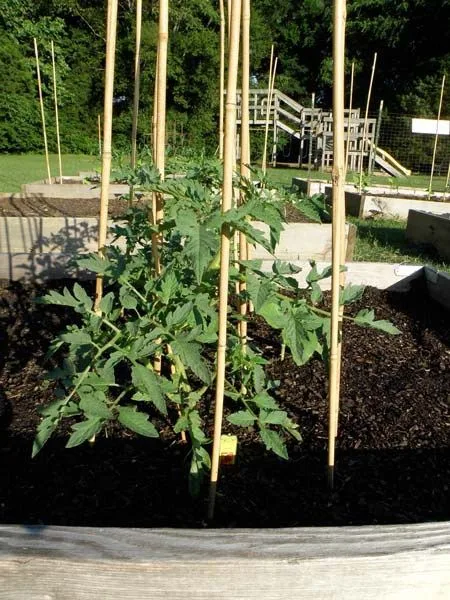
Push 6 to 8 canes into a circle roughly 18 inches across, angling them inward to cross near the top. Tie the apex firmly and the structure is self-supporting. Wigwams are compact, well-suited to raised beds, and quick to set up.
The limit is capacity and picking access. A wigwam fits 6 to 8 plants, and reaching into the centre gets awkward once plants fill out. Use braided hemp cord at the apex to hold the bundle securely without slipping through the season.
Double-row A-frame
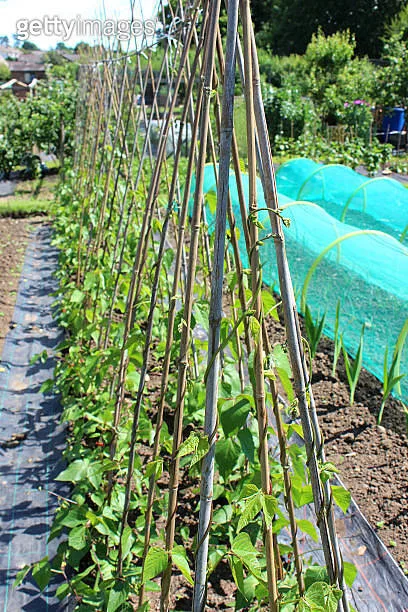
Two rows of canes, 18 to 24 inches apart, lean inward to cross at around 6 feet. A horizontal cane lashed along the junction line locks the frame solid. This is the classic allotment setup for good reason: it handles 12 to 20+ plants, allows easy picking from both sides, and stands stable in wind.
The horizontal brace is not optional. Without it, the frame acts like a hinge under load. Lash each junction tightly with a rot-resistant garden cord for connections that hold through a wet summer.
| Structure | Plants | Stability | Best for |
|---|---|---|---|
| Wigwam | 6-8 | Good | Raised beds, small plots |
| Double-row A-frame | 12-20+ | Excellent | Allotments, open rows |
Bamboo vs. Hazel, Fiberglass, and Metal: When to Consider Alternatives
Bamboo is the default for most growers. It's affordable, widely available, and strong enough for the majority of setups. It's not the only option.
| Support | Pros | Cons | Best for |
|---|---|---|---|
| Natural bamboo | Cheap, biodegradable, flexible | Rots at soil line over time | Most gardens and allotments |
| Hazel sticks | Strong, traditional, free if coppiced | Irregular sizing, hard to source | Rural plots, traditional growing |
| Fibreglass canes | Long-lasting, consistent gauge | More expensive, not biodegradable | Exposed sites, permanent setups |
| Metal rods | Extremely rigid | Heavy, prone to rust, hard to insert | Heavy-duty permanent frames |
Hazel is genuinely effective for runner beans. The Royal Horticultural Society recognises it as a traditional and appropriate support material for climbing crops. The practical barrier is sourcing: unless you're coppicing your own or near a rural supplier, hazel stakes are difficult to find commercially.
Fibreglass canes justify their higher upfront cost on exposed plots. They don't rot, they won't snap under a heavy bean canopy, and a quality set lasts 10 or more seasons. For most sheltered kitchen gardens, though, 12mm bamboo at 8 feet remains the pragmatic standard.
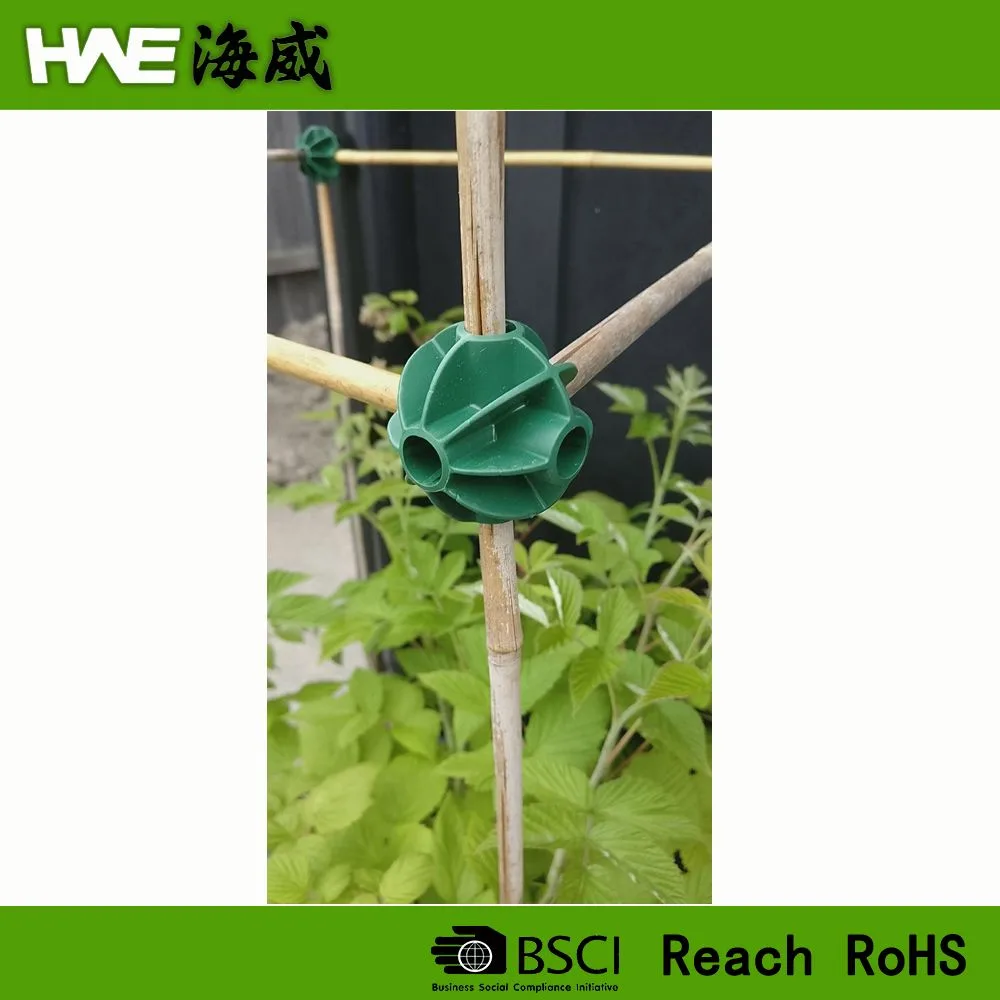
Whichever material you use, finish the structure with durable binding cord at every crossing and lashing point. A strong frame with weak connections fails just the same.
Mistakes That Bring the Whole Structure Down Mid-Season
Inserting canes too shallow
Six inches isn't enough for a crop this heavy. Target 8 to 9 inches of insertion in open ground. In raised beds with shallower soil, add a lower cross-bar tied between uprights to anchor the base where depth is limited.
Skipping the horizontal brace
A double-row frame without a top brace cane acts like a hinge. Both rows splay outward under crop load, and wind does the rest. Fit the horizontal cane before planting, not as an afterthought in July.
Tying too loosely
A knot that holds in May can slip under the combined load of foliage, stems, and pods by August. Retie any connections that feel loose after the first heavy rain. A failing tie in the middle of a structure is often what triggers a full collapse.
Ignoring cane safety caps
Bamboo tips at face height are a puncture hazard, especially when you're bending over to harvest. Cane safety caps fit in seconds and cost almost nothing. It's a fix that's easy to skip and easy to regret.
Leaving canes in wet ground over winter
This shortens cane life faster than anything else. Pull them at the end of the season, brush off soil and surface mould, and store them flat in a dry shed or garage. Well-stored canes last three to five seasons without issue.
Frequently Asked Questions About Bamboo Canes for Runner Beans
How tall should bamboo canes be for runner beans?
Use 8-foot canes as a minimum. Runner beans regularly reach 8 to 10 feet in a productive season, so a 6-foot cane runs out of height well before harvest. On exposed or high-yield plots, 10-foot canes give extra headroom without forcing early pinching.
What gauge bamboo cane works best for runner beans?
Go with 12mm on most plots. Ten millimetres works as a minimum on sheltered ground, but 12mm handles the full weight of a mature bean canopy more reliably. Thin 8mm canes are adequate for peas and sweet peas, but they bow and snap under a heavy runner bean crop.
How many canes do I need for a row of runner beans?
For a 10-plant double row, you need at least 14 canes: 12 uprights and 2 horizontal braces. A wigwam supporting 6 to 8 plants needs 6 to 8 canes. Always buy a few extras since snapped canes mid-season are a common problem with budget bundles.
When should I put up bamboo canes for runner beans?
Set up the structure before you sow or transplant. It's much harder to insert canes without disturbing roots once plants are in the ground. For direct-sown beans, build the full frame first and sow one seed at the base of each cane.
Can bamboo canes be reused the following season?
Yes, most canes last three to five seasons with basic care. Pull them at the end of the growing season, wipe off soil and any surface mould, and store them flat and dry. Leaving canes in wet soil over winter is the main cause of premature rot at the base.
Best Bamboo Canes for Runner Beans: Final Recommendation
The clearest answer for most growers: 8-foot natural bamboo canes at 12mm gauge. This combination handles full crop load on sheltered plots, fits both wigwam and A-frame structures, and leaves adequate working height for vigorous varieties.
On sheltered ground with shorter varieties, 10mm at 8 feet is workable. On exposed allotments, step up to 14mm for added stability. The price difference between 10mm and 12mm is small.
The structural difference at peak season is not.
Natural, untreated canes remain the right choice for food crops. Green-dyed or lacquered alternatives suit an ornamental potager, but there's no functional reason to choose them over plain bamboo for a working vegetable plot.
For structure, the double-row A-frame is the stronger choice for 10 or more plants. A wigwam works well for small raised beds or corner plots. Fit a horizontal brace cane in both setups and lash every junction firmly from day one.
Buy in a pack of 20 to have spares on hand, and confirm the supplier states a minimum gauge rather than a nominal size. Pair your canes with the right plant-friendly cord and the structure will carry you through to the final harvest without a collapse in sight.
Similar Posts