How Much Twine Does Your Garden Actually Need?
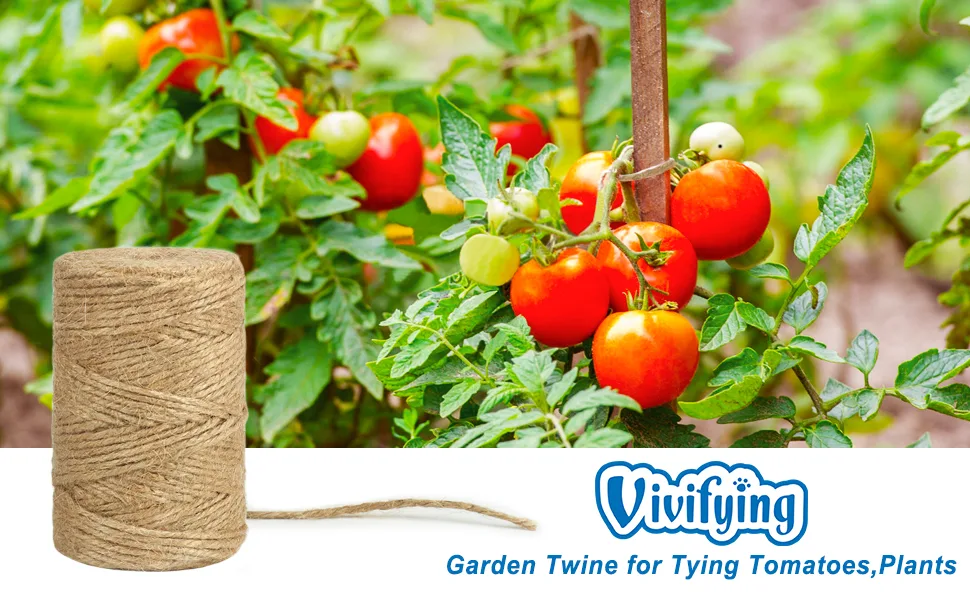
Figuring out how much twine I need for the garden is one of those questions that sounds simple until you're halfway through staking season with an empty spool. The answer changes completely depending on what you're growing, how you're supporting it, and the size of your plot.
A standard 100-foot spool sounds generous until you account for the fact that one indeterminate tomato plant can use up to 22 feet of twine over a full season. As of 2026, most home gardeners underestimate because they buy without calculating first. The workflow below fixes that.
Quick Answer
Your plants and support method determine how much twine you need for the garden. A single indeterminate tomato needs 10 to 22 feet per season. A 10-foot trellis row for peas or beans needs around 25 to 30 feet.
Start with a 200-foot spool for 10 to 20 mixed plants. Florida weave setups or larger plots need 500 feet or more.
Why There's No Single Answer (And How to Find Yours)
Most gardeners run short because they treat twine like a pantry staple rather than a calculable quantity. It isn't.
The right amount depends on three things: what you're growing, how you're supporting it, and how many plants you have. An indeterminate tomato grows 5 to 8 feet tall and needs tying every 6 to 8 inches of new growth. That adds up fast over a full season.
A row of climbing beans uses twine differently. You're stringing horizontal guide lines across the whole row, not tying individual stems. Same-sized garden, totally different calculation.
For a broader look at natural fibre options across vegetable crops, that's a useful read before you commit to a type.
The Four Variables That Control Your Twine Estimate
Before running any numbers, pin down these four inputs.
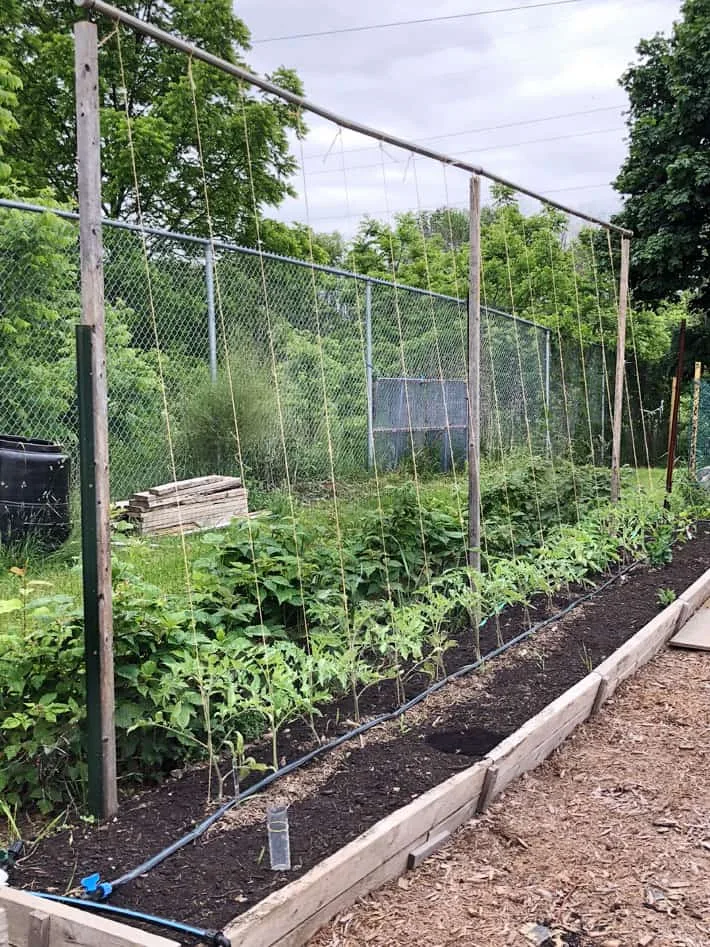
Plant type and growth habit. Indeterminate tomatoes keep growing all season long. Determinate varieties stop at a fixed height. Climbing beans spiral upward continuously.
Each type has different staking demands, so don't lump them together.
Support method. A single stake with individual ties uses far less twine than a Florida weave trellis. The same 10 plants can need anywhere from 80 to 300 feet of twine depending on which method you use.
Plant height at maturity. Check your seed packet. Indeterminate tomatoes reach 5 to 8 feet. Pole beans hit 6 to 10 feet.
Determinate tomatoes cap at 3 to 4 feet.
Height controls how many tie points you'll need, so the variety matters before you touch a calculator.
Number of plants. Ten tomato plants at 18 feet each is 180 feet before you've added any safety buffer. The per-plant figure matters, but the plant count is what drives your real total.
For heavier crops that put serious load on each tie, twine with extra tensile pull handles the strain without snapping mid-season.
How to Calculate Twine by Plant Type
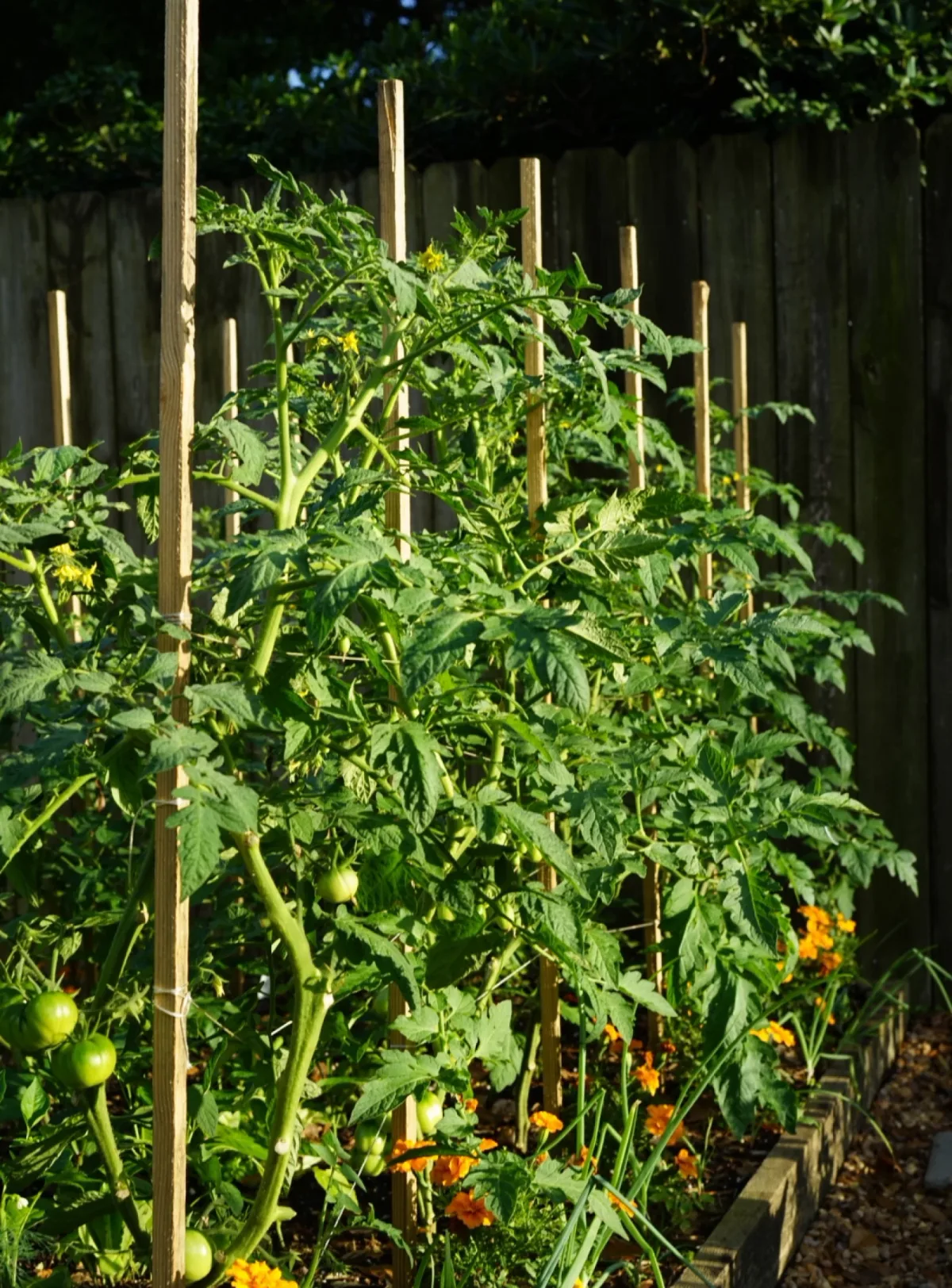
Indeterminate Tomatoes
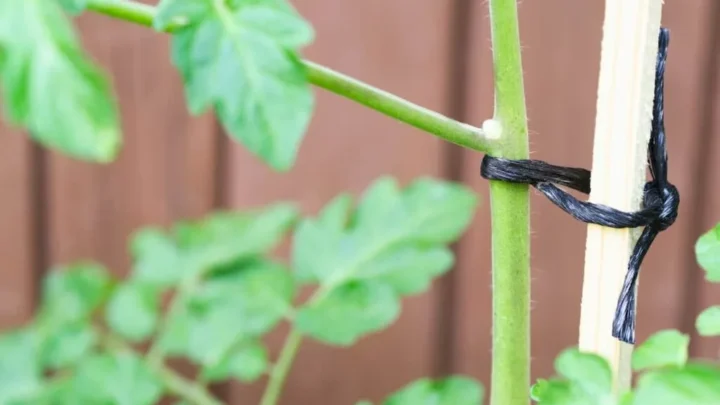
These are your heaviest twine users. Extension guidance from Cornell University recommends tying indeterminate tomatoes every 6 to 8 inches of new vertical growth throughout the season.
Use this formula:
- Estimate mature plant height (e.g., 6 feet = 72 inches)
- Divide by 7 inches average tie spacing = roughly 10 ties per plant
- Allow 18 inches of twine per tie, including knot allowance = 15 feet
- Add 20% for re-ties and broken lengths = 18 feet per plant
Ten indeterminate plants = roughly 180 feet of twine for the season.
Climbing Beans and Peas
With these crops, you're guiding rather than heavily supporting. Light, frequent ties do the job.
A practical budget is 6 inches of twine per tie, with 4 to 6 ties per plant over the season. For 20 pole bean plants, that's 40 to 60 feet total. Peas also need horizontal guide lines strung across the trellis frame.
Measure your row length and multiply by the number of horizontal lines. Add that figure to your per-plant total.
Cucumbers, Squash, and Tall Flowers
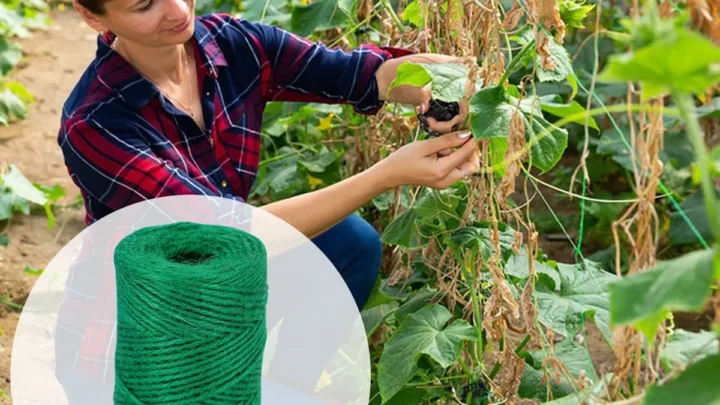
Cucumbers on a vertical trellis typically need 3 to 5 loose ties per plant as they climb. Ground-grown squash rarely needs more than one early guide tie. Dahlias and sunflowers need 2 to 3 ties per stem, using about 12 inches of twine each.
Budget 5 to 10 feet per plant for these crops. They're light twine users compared to tomatoes.
The Florida Weave Method
The Florida weave runs twine along both sides of a planted row, looping around each stake as you go. It's efficient for closely planted tomato rows and cuts individual tie time dramatically.
A 10-foot row needs roughly 25 to 30 feet of twine per pass. Most growers run 2 to 3 passes over the full season. One 10-foot Florida weave row = 75 to 90 feet of twine at minimum.
How to Total Up Your Garden and Choose a Spool Size
With your per-plant numbers worked out, the total is straightforward:
- Group your plants by type.
- Multiply the per-plant estimate by plant count for each group.
- Add all groups together.
- Multiply the grand total by 1.2 to build in a 20% safety buffer.
Here's a worked example for a typical mixed kitchen garden:
| Plant type | Count | Twine per plant | Subtotal |
|---|---|---|---|
| Indeterminate tomatoes | 8 | 18 ft | 144 ft |
| Pole beans | 20 | 3 ft | 60 ft |
| Cucumbers on trellis | 6 | 8 ft | 48 ft |
| Dahlias | 10 | 5 ft | 50 ft |
| Total (pre-buffer) | 302 ft | ||
| With 20% buffer | 362 ft |
A 200-foot spool leaves this garden short. A 500-foot spool covers it comfortably, with plenty left for next season.
| Spool size | Best suited for |
|---|---|
| 50 to 100 ft | 3 to 5 tomato plants or one small raised bed |
| 200 ft | Small mixed garden, around 10 to 15 plants |
| 500 ft | Medium garden, multiple crop types |
| 1,000 ft+ | Large plots, Florida weave rows, or market scale |
If you're growing climbing beans alongside tomatoes, hemp fibre for mixed staking jobs handles both crop types well from a single spool.
Jute, Sisal, or Poly: Matching Twine Type to Your Setup
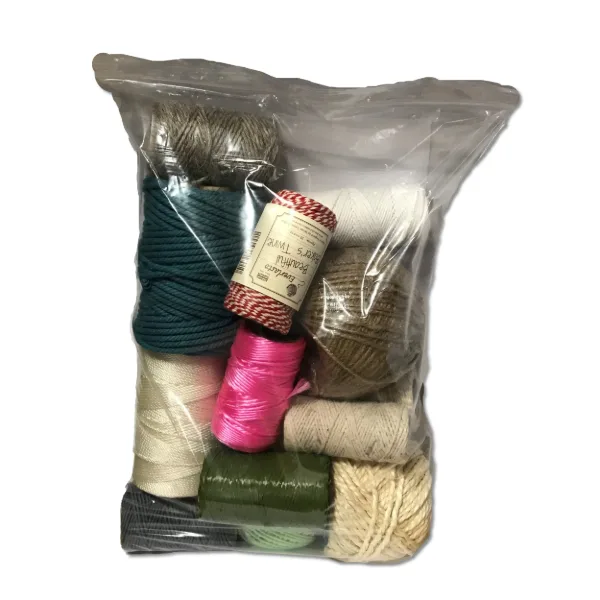
Once you know how much twine you need, pick the right material. The wrong choice can mean replacing it mid-season or introducing non-compostable waste into your beds.
| Twine type | Tensile strength | Biodegradable | Best use |
|---|---|---|---|
| Jute | Moderate | Yes | Light crops, short-season tying |
| Sisal | High | Yes | Heavy crops, longer growing seasons |
| Polypropylene | Very high | No | Multi-season, commercial, Florida weave |
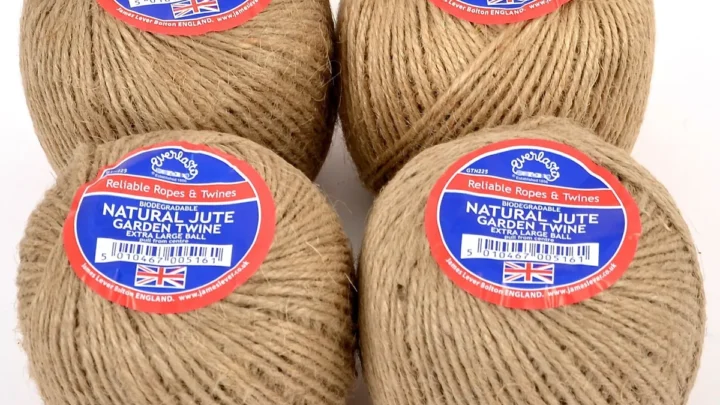
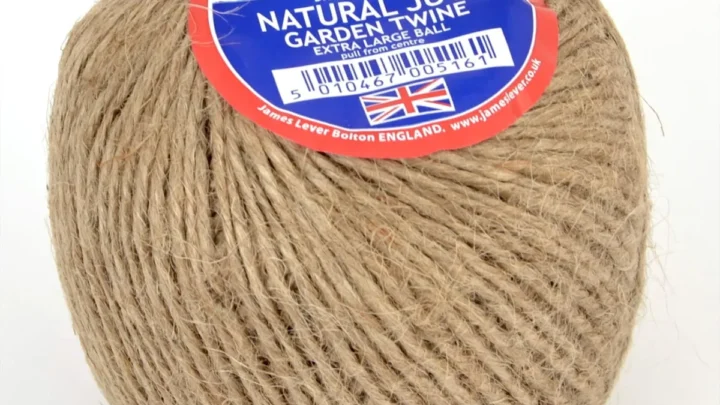
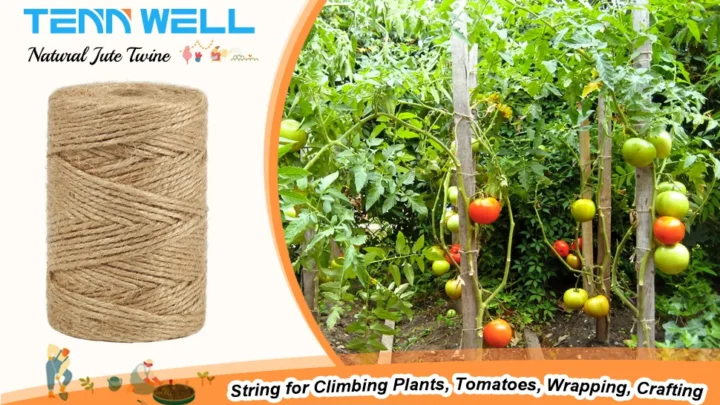
Jute is the default for most home gardeners. It's soft on stems, composts in place at season end, and is available almost everywhere. For anything from tomatoes to dahlias, it handles the job.
Sisal holds knots better under load and resists fraying longer than jute. It's the right pick for heavy-fruiting varieties like beefsteak tomatoes or winter squash. For a durable natural option, reinforced jute for heavier crops is worth considering before you buy.
Polypropylene twine is reusable, UV-stable, and won't rot in wet conditions. The tradeoff is that it doesn't break down in soil, so pull it out fully before composting or tilling. For certified organic growers, the USDA National Organic Program specifies which synthetic materials are permissible in organic systems.
For a detailed look at how jute performs across different crop types, matching fibre to plant variety covers the specifics clearly.
Mistakes That Leave You Short Mid-Season
The biggest mistake is buying for where your plants are now, not where they'll be in eight weeks. A newly planted tomato needs one or two ties. That same plant at full height needs ten or more.
Buy for the whole season, not planting day.
The second common error is ignoring knot allowance. Every tie uses more twine than the stem-to-stake gap suggests. Factor in the loop, the knot, and a short tail.
That's typically 18 inches per tie, not 6 or 8.
A third issue is buying by roll weight rather than footage. Two spools that look identical on the shelf can carry very different lengths. Always check the stated footage on the label before committing.
| Mistake | Why it happens | Fix |
|---|---|---|
| Buying one small spool | Underestimating tie count per plant | Calculate per-plant totals first |
| Ignoring knot allowance | Measuring stem-to-stake only | Allow 18 inches per tie |
| Choosing by roll weight | Footage varies between products | Check stated footage on the label |
| Jute weakening mid-season | Wet climate, natural fibre degradation | Buy a spare roll or switch to sisal |
Frequently Asked Questions
How much twine do I need per tomato plant?
An indeterminate tomato typically needs 10 to 22 feet of twine over a full growing season. Use the lower figure for shorter varieties or drier climates with slower growth. Add 20% as a buffer for re-ties.
Determinate varieties use far less, usually 5 to 8 feet total.
What spool size should I buy for a single raised bed?
A 4 by 8-foot raised bed with 4 to 6 mixed plants typically needs 50 to 100 feet of twine per season. If you're growing indeterminate tomatoes in that bed, move up to a 200-foot spool to stay comfortable through the full season without running short.
Can I reuse garden twine from last season?
Natural twines like jute and sisal degrade outdoors and are rarely worth reusing. Polypropylene is the exception. It's reusable year after year if cleaned and stored dry.
Check it for fraying before re-use, since weakened twine won't support heavy fruiting stems reliably.
How much twine does the Florida weave use per row?
Plan for 75 to 90 feet per 10-foot row across a full season. That accounts for 2 to 3 passes running twine along both sides of the row. Longer rows scale proportionally, so a 20-foot row needs 150 to 180 feet for the season.
Does jute twine hold up in wet climates?
In dry conditions, jute holds well through a full growing season. In wetter regions like the Pacific Northwest or much of the UK, it can weaken before harvest. If rainfall is frequent in your area, sisal lasts longer outdoors.
Polypropylene is the most reliable option for multi-pass trellis systems in high-rainfall gardens.

Similar Posts