Natural Garden Twine for Vegetables: A Complete Guide
Choosing the wrong natural garden twine for vegetables is one of those small mistakes that costs you at the end of summer, not the beginning. The twine looks fine at planting time, but by August it's either cutting into a tomato stem or rotted through after three weeks of rain.
The good news is the choice simplifies once you understand what each material actually does. Jute absorbs up to 30% of its weight in water, which is why it regularly fails in wet growing seasons. Hemp, rated at 40 to 55 pounds tensile strength per strand, holds up across the full season.
There are five natural twine materials worth knowing, and the differences between them are significant.
Quick Answer
Natural garden twine for vegetables should be soft, strong, and free from chemical treatments. Jute is the most common choice and performs well in dry climates. Hemp is stronger and holds up better in wet seasons.
Cotton is the gentlest option for delicate stems. Match your twine to your crop's weight and local moisture levels.
Why the Type of Twine You Choose Actually Matters for Vegetables
Most gardeners grab whatever twine is on the shelf. The problem is that not all natural twines behave the same way against a growing plant stem.
A tomato plant in full production can carry 10 to 15 pounds of fruit on a single cordon. Jute at 2-ply breaks at roughly 25 to 30 pounds under dry conditions, but saturated fiber weakens it well below that. Sisal holds up structurally but is rough enough to abrade a pepper stem to the point of infection.
The tying method matters too, but you can't compensate for the wrong fiber with a better knot. Choosing the right material upfront prevents mid-season re-staking and real crop loss.
Browse more vegetable growing guides if you're building out a fuller growing setup.
The Five Natural Twine Materials Used in Vegetable Gardens
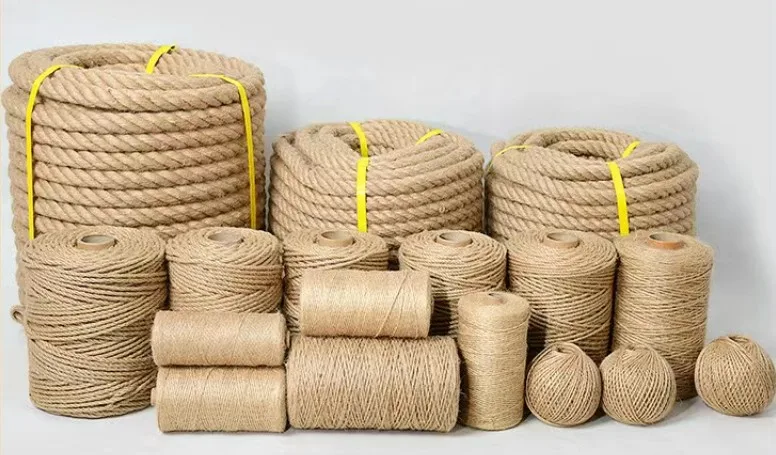
Each of these five fibers comes from a different plant and behaves differently in your garden. Here's what you need to know before you buy.
Jute Twine
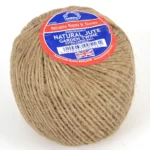
Jute comes from the Corchorus plant family and is the most widely available natural garden twine. It's affordable, reasonably soft, and biodegrades within one to two years under normal soil conditions.
The main weakness is moisture. Jute absorbs up to 30% of its weight in water, which significantly weakens the fiber during wet growing seasons. It's best suited to drier climates or polytunnel use where rain exposure is limited.
Sisal Twine
Sisal comes from the Agave sisalana plant and is noticeably tougher than jute. It handles outdoor moisture better and typically lasts two to three growing seasons before breaking down.
The trade-off is texture. Sisal fibers are rough and stiff, and tied directly against soft young stems (peppers, young cucumber shoots), they can cause surface abrasion that opens the plant to disease. Always use the figure-8 tying method if you go with sisal.
Hemp Twine
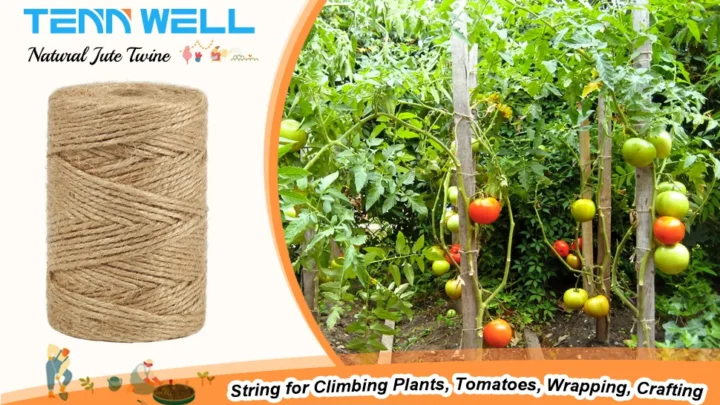
Hemp twine is made from Cannabis sativa fiber and is the strongest natural option for vegetable gardens. Tensile strength runs 40 to 55 pounds per strand depending on ply, making it suitable for indeterminate tomatoes and heavily fruiting squash.
Hemp is also more rot-resistant than jute and holds up through wet seasons without significant strength loss. The downside is cost: hemp typically runs 30 to 50% more per foot than jute.
Cotton Twine
Cotton is the softest natural twine available. It's the safest choice for delicate stems, young transplants, and any crop where stem abrasion is a concern.
Longevity is the limitation. Cotton biodegrades within one to five months in active soil and lacks the tensile strength for heavy fruiting plants. It's best for light-duty training, pea tendrils, or early-stage pepper support.
Coir (Coconut Fiber) Twine
Coir comes from coconut husk fibers and sits between sisal and jute on the softness scale. It's naturally more moisture-resistant than jute and biodegrades more slowly, typically over two to three years.
Coir is less common at garden centers but worth seeking out for humid climates where jute would fail prematurely.
Head-to-Head Comparison: Strength, Softness, and Longevity
Here's how the five materials compare across the metrics that matter most to vegetable gardeners.
| Twine Type | Tensile Strength | Stem Softness | Wet Weather Performance | Biodegradation Time |
|---|---|---|---|---|
| Jute | 25-35 lbs | Soft | Poor | 1-2 years |
| Sisal | 35-40 lbs | Rough | Moderate | 2-3 years |
| Hemp | 40-55 lbs | Moderate | Good | 2 months to 2+ years |
| Cotton | 15-25 lbs | Very soft | Poor | 1-5 months |
| Coir | 30-40 lbs | Moderate | Good | 2-3 years |
Tensile strength ranges are drawn from manufacturer specifications and aggregate supplier data as of 2026. Real-world performance shifts with ply count, storage conditions, and climate.
Hemp and jute cover the full range of needs for most home vegetable gardens. Hemp handles the heavy crops. Jute handles the rest in dry to moderate weather.
Which Twine Works Best for Each Vegetable
The right twine depends on crop weight, stem sensitivity, and growing season length.
| Vegetable | Recommended Twine | Reason |
|---|---|---|
| Indeterminate tomatoes | Hemp | High fruit load needs maximum tensile strength |
| Determinate tomatoes | Jute (dry) or Hemp (wet) | Moderate weight, short enough season for jute |
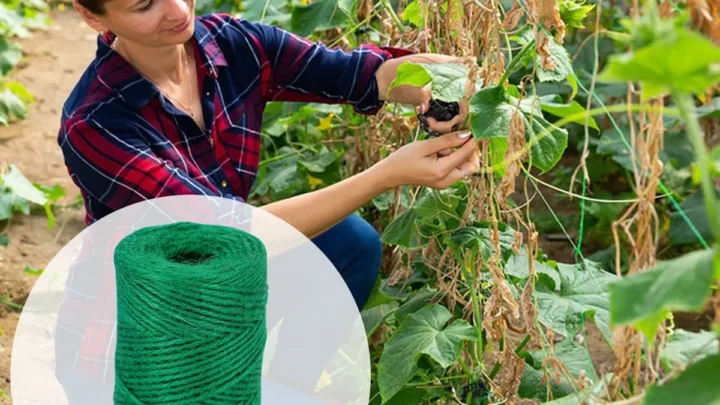
| Cucumbers | Jute or Cotton | Soft stems need gentle fiber |
| Runner beans / pole beans | Jute | Light load, short seasonal window |
| Peppers | Cotton | Brittle stems crack easily against rough twine |
| Peas | Cotton | Very light, delicate tendrils |
| Squash / melons | Hemp | Heavy vines and fruit require strong, durable support |
Peppers deserve particular attention. Their stems are woody but brittle near the base, prone to snapping under load rather than flexing. Cotton gives enough flex to absorb plant movement without constricting the stem.
Get in touch directly if you have questions about specific varieties or growing conditions.
Biodegradability and Soil Safety: What to Know Before You Buy
Not every twine labeled "natural" is soil-safe. Some commercial twines are preserved with copper compounds, boron-based treatments, or fire retardants to extend shelf life. These chemicals can leach into growing medium over time, which is a real concern in raised beds with limited soil volume.
Untreated jute, cotton, and hemp break down into organic matter without leaving harmful residue. The USDA National Organic Program permits untreated natural fiber ties for certified organic operations, which is a useful benchmark for general safety.
Always check the product label for "untreated" or "chemical-free" before buying. If no treatment status is listed, contact the supplier directly before using the twine near edible crops.
One term worth knowing: "degradable" is not the same as "biodegradable." Oxo-degradable twines fragment into microplastic particles rather than fully breaking down. Look for explicit natural fiber composition rather than a degradable plastic additive.
Find out more about how we approach garden research on our about page.
How to Spot Chemically Treated or Fake "Natural" Twine
At the point of purchase, three quick checks tell you whether a twine is genuinely safe for a vegetable garden.
First, look for OEKO-TEX Standard 100 certification. This confirms the twine has been independently tested for heavy metals, formaldehyde, and pesticide residues. It's the most reliable third-party signal available for natural fiber products.
Second, check fiber composition. The ingredient list should say 100% jute, hemp, cotton, coir, or sisal. If "polypropylene" or "PE" appears anywhere, the product is not a true natural twine.
Third, smell it. Untreated natural fibers smell earthy or neutral. A sharp chemical odor is a reliable sign of a preservative coating.
The Right Thickness and Ply for Different Vegetables
Diameter and ply count affect both strength and stem safety. Twine that's too thick won't flex around a growing stem. Too thin and it cuts in under fruit load before harvest.
For vegetable garden use, the practical range is 1mm to 3mm. Anything above 3mm is designed for baling or fencing, not plant training.
| Plant Type | Recommended Diameter | Recommended Ply |
|---|---|---|
| Peas, herbs | 1mm | 2-ply |
| Cucumbers, beans | 2mm | 2-ply |
| Peppers, young tomatoes | 2mm | 2-ply or 3-ply |
| Mature indeterminate tomatoes | 2-3mm | 3-ply |
| Squash, melons | 3mm | 3-ply or 4-ply |
A 3-ply construction gives more load capacity than a 2-ply at the same diameter without adding significant stiffness. That's the right balance for most serious tomato growing.
How to Tie Twine Without Damaging Your Plants
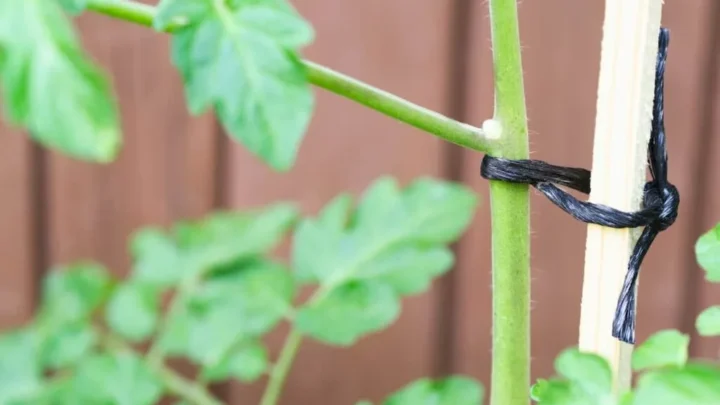
The figure-8 tying technique protects the stem by creating a buffer loop between plant and stake, so the twine never presses directly against the tissue.
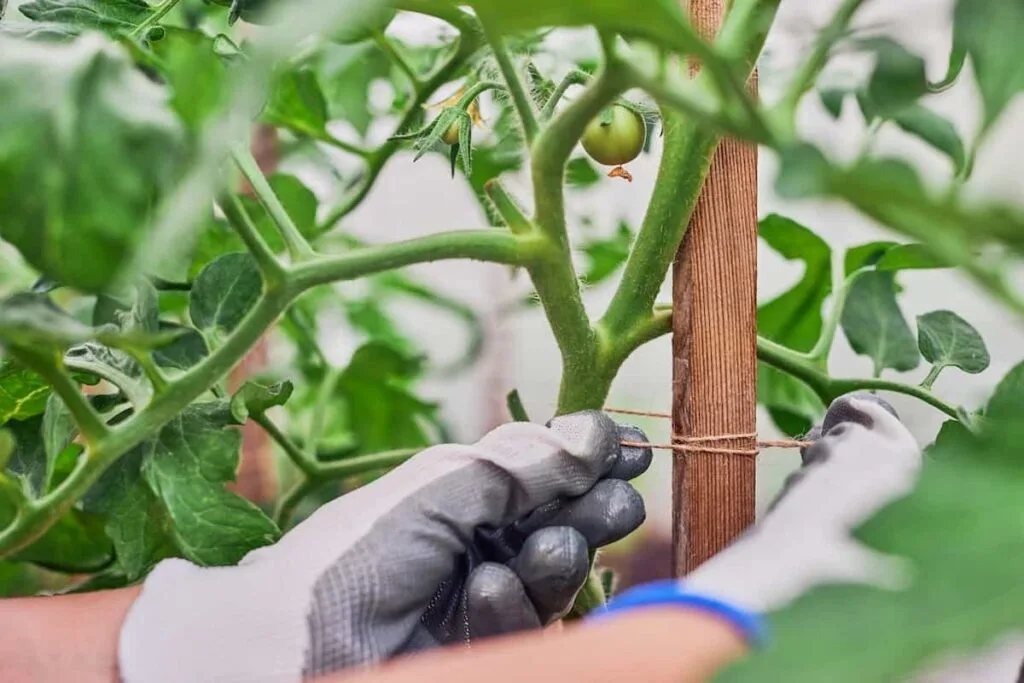
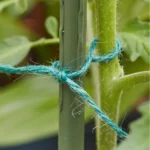
Secure the twine to the cane or stake with a firm loop knot first. Then bring the twine around the stem in a figure-8 so the twist sits between stem and support. The stem should sit inside a loose circle with room to expand.
Tension is the critical variable. Snug enough to hold the plant upright under fruit load and wind. Loose enough that you can slip a finger between the twine and the stem.
Re-check ties every two to three weeks through the main growing season. Stems thicken quickly from June onward, and a correctly tied knot in May can become a tourniquet by July if left unchecked.
Mistakes That Ruin Plants (and Which Twines Make Them Worse)
Stem girdling is the most common and most costly mistake. It happens when twine is tied too tightly and the stem can't expand as it grows. Sisal is the worst material for this: its rough texture adds abrasion on top of compression.
Tying too early is another frequent error. Young transplants don't need rigid support in the first two weeks. Tying at planting means the twine is already snug before the stem has developed the girth to cope.
Jute in wet summers is a mistake that verified buyer feedback flags consistently. Gardeners in high-rainfall regions report jute failing at the six-to-eight-week mark, well before indeterminate tomatoes have peaked. Hemp or coir holds up where jute won't.
Watch your knot choice too. Slip knots tighten under load. A fixed loop knot on the stake side with a loose figure-8 around the stem stays put and won't self-tighten as the plant moves in wind.
Cost and Value: What You Get Per Roll at Each Price Point
Natural twine prices vary by material, ply, and roll length.
| Twine Type | Typical Price (100 ft roll) | Cost Per Foot |
|---|---|---|
| Jute (2-ply) | $3-6 | $0.03-0.06 |
| Cotton (2-ply) | $5-9 | $0.05-0.09 |
| Sisal (2-ply) | $5-8 | $0.05-0.08 |
| Coir (2-ply) | $6-10 | $0.06-0.10 |
| Hemp (3-ply) | $8-15 | $0.08-0.15 |
Jute is the cheapest entry point. But the real cost comparison depends on how much of the roll you use before it fails. A $5 roll that gives out at week six in a wet season costs more in practice than a $12 roll that holds through to frost.
For a raised bed with six to eight tomato plants alongside cucumbers and beans, aggregate buyer data suggests a 200 ft roll of 2-ply jute or a 100 ft roll of 3-ply hemp covers a full season comfortably.
Our Verdict: The Best Natural Garden Twine for Most Vegetable Growers
For most vegetable gardeners, hemp is the clearest all-round choice. It handles heavy crops, holds up through wet weather, and stays gentle on cucumbers and beans when tied correctly.
Jute is the right pick for dry-climate growers or anyone managing a large plot on a tighter budget. It performs reliably for determinate tomatoes, beans, and peas without the premium price.
For peppers specifically, add a small roll of cotton. No other material gives a brittle-stemmed plant the flexibility it needs without risking stem damage.
A practical rule that works for most gardens: hemp for heavy crops, jute for light ones, cotton for anything delicate. That three-twine approach covers every vegetable growing scenario without overcomplicating your kit.
Frequently Asked Questions
Is jute twine safe to use in a vegetable garden?
Yes, untreated jute is fully safe for vegetable gardens. It biodegrades without leaving harmful residue in the soil. Always confirm the product is labeled untreated or chemical-free before use near edible crops, since some commercial jute carries preservative coatings.
How long does natural garden twine last outdoors?
It depends on material and climate. Jute holds for one full season in dry conditions but can fail in as little as six weeks through a wet summer. Hemp lasts a full season in most climates.
Cotton may begin to weaken by midsummer in warm, humid conditions.
Can I compost natural garden twine at the end of the season?
Yes. Untreated jute, cotton, and hemp are fully compostable and can go straight into the heap alongside plant debris at season's end. Sisal and coir take longer to break down but are still compost-safe.
Avoid composting any twine of unknown treatment status.
What is the best natural twine for tying tomatoes?
Hemp is the best choice for indeterminate tomatoes. Its tensile strength of 40 to 55 pounds per strand handles heavy fruit loads, and it resists moisture far better than jute. For determinate varieties with a lighter crop, 3-ply jute works well in dry climates at a lower cost.
What happens if garden twine is tied too tightly around a stem?
Stem girdling occurs when twine prevents a stem from expanding as the plant grows. This restricts the flow of water and nutrients above the tie point. The plant may wilt on one side or drop fruit early.
Loosen or re-tie affected sections as soon as you spot the problem.

Similar Posts





[…] or ties: netting clips prevent tearing where net meets frame. A length of natural vegetable twine is useful for lashing hoop bases to their anchor […]
[…] mode applies to your rope determines which prevention steps are worth taking. If you're using fibre twine in your vegetable plot, your enemy is moisture and fungi. If you're running polypropylene across a frame, UV […]
[…] securing a sleeve net to a plant stem, use plant-safe ties. Natural plant cordage won't abrade bark or harm resting caterpillars. Both hemp-based plant ties and jute-fibre ties […]
[…] attaching netting to hoops or frame posts, a natural plant twine keeps things tidy without abrading the mesh. Durable plant ties are especially useful when netting […]
[…] peas, a row of short canes with natural cord woven horizontally between them creates a fast, effective pea net that takes under ten minutes to set […]
[…] tasks put your face close to the cane while both hands are occupied. Reaching for plant-friendly twine while angled over a planting bed shifts your sightlines away from surrounding cane tips at exactly […]
[…] handles pot wrapping, hanging planters, pergola decoration, and woven privacy screens. You can use plant-safe twine for fine vegetable support and switch to chunkier rope for more structural, visible […]
[…] It composts at season's end alongside your plant debris, and ties off cleanly with natural twine safe for vegetables. The garden twine range covers the main material options if you're choosing between […]
[…] Choose a diameter that doesn't flex under moderate hand pressure. Tie the plant loosely using plant-safe natural twine rather than […]
[…] is the standard choice. It's strong, biodegradable, and grips bamboo without slipping. Our guide to vegetable-plot twine covers the best weights and grades for this kind of […]
[…] they're clean and dry, have some natural plant ties to hand before you start […]
[…] the netting loosely at the tunnel ends using natural plant cord rather than rigid clips that can abrade the […]
[…] through all three before buying. If you're planning to use natural twine across food crops, getting the weight right from the start saves you from re-staking halfway through the […]
[…] a broader look at natural fibre options across vegetable crops, that's a useful read before you commit to a […]
[…] entirely, but it slows encroachment enough to extend maintenance intervals. If you're already using natural fiber for plant support elsewhere in the garden, structural edging rope is a logical next […]
[…] home vegetable gardeners find that plant-safe natural twine covers their needs well. It's gentle on stems, affordable, and composts cleanly at the end of […]
[…] does. What it does brilliantly is provide visual definition and character. It pairs naturally with plant-supporting twines and ties already part of a productive garden […]