Best Mesh Size for Butterfly Netting: A Complete Guide
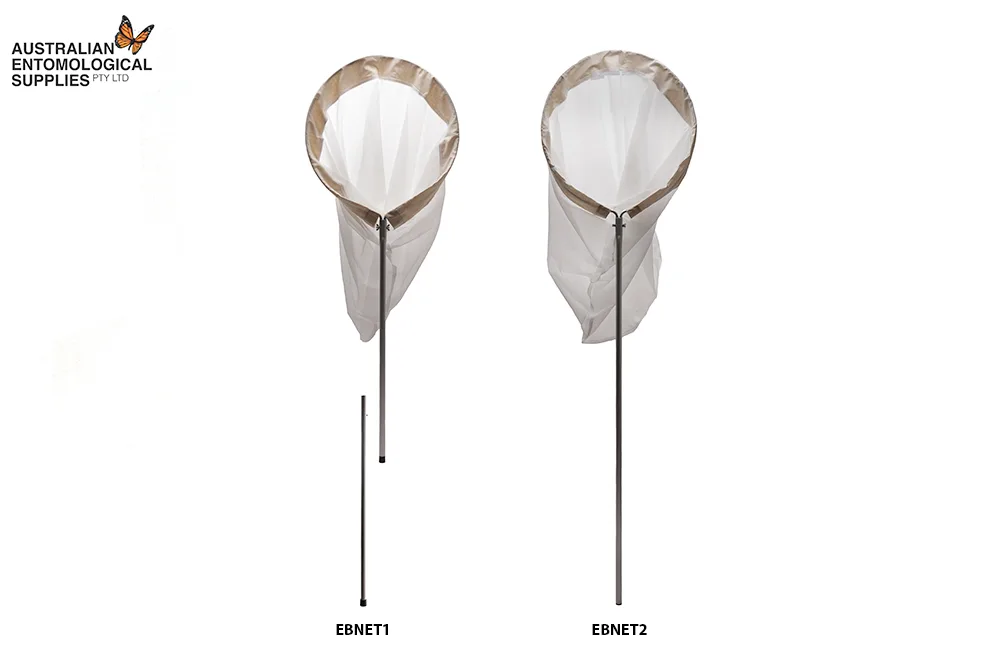
If you've ever asked what mesh size for butterfly netting you need, most advice gives you one number and no context. That's a problem. The right mesh size shifts depending on the species you're targeting, the type of net you're using, and what happens to the butterfly afterward.
The standard benchmark, confirmed by entomological supply specifications as of 2026, is a 1mm mesh opening for general aerial catching nets. That number moves significantly finer for small, scale-sensitive species and coarser for sweep nets built to handle dense vegetation. Here's how to work through that decision.
The Short Answer (And Why It Depends on What You're Catching)
For most butterfly netting, a 1mm mesh opening is the right starting point. Fine mesh (0.5mm or below) suits small species like blues and skippers. Coarser mesh (2mm to 3mm) works for sweep nets.
Rearing enclosures need ultra-fine mesh around 0.4mm to 0.6mm. The right size depends on species, net type, and purpose.
That quick answer only holds for a standard aerial catching net targeting mid-sized species in open terrain. Change any of those conditions and the number changes with them.
The most common confusion is treating mesh size as a single-number product spec. It isn't. Some suppliers list mesh count in holes per inch, others list opening size in millimetres.
For butterfly netting decisions, opening size in millimetres is the only figure that drives a useful choice.
| Net Type | Recommended Mesh Opening | Primary Factor |
|---|---|---|
| Aerial catching net (general) | 1mm | Retention balanced with swing speed |
| Aerial catching net (small species) | 0.5mm to 0.8mm | Escape prevention for narrow-bodied insects |
| Sweep net | 2mm to 3mm | Mesh durability over fineness |
| Rearing or sleeve net | 0.4mm to 0.6mm | Larval containment and airflow |
| Photography or display enclosure | 0.5mm to 1mm | Visibility alongside retention |
Two questions unlock the right row in that table. What's the smallest species you expect to catch in this session? And what type of net are you using?
Answer those first, and the mesh decision follows.
How Mesh Size Actually Works: Opening Size, Drag, and Wing Scale Damage

Mesh opening size is the physical gap between threads in the netting material. It controls three things: which species can escape, how much drag the net creates during a swing, and whether the mesh surface harms wing scales on contact.
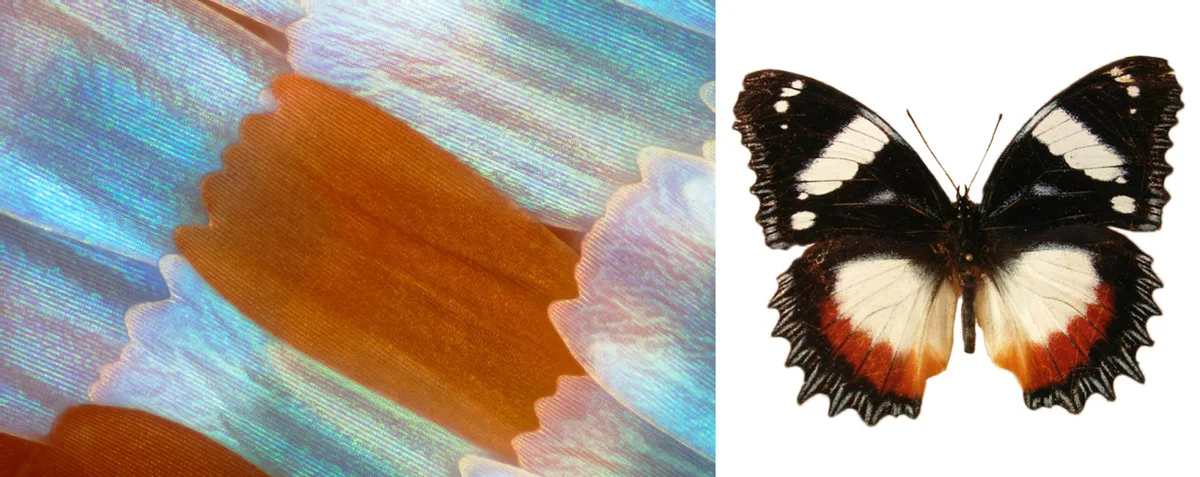
Wing scales are the tiny overlapping structures that carry a butterfly's colour and pattern. They detach easily. Entomological collection practice confirms that rough or oversized mesh strips scales from wing surfaces during the struggling that follows capture.
A scale-damaged specimen is often unusable for taxonomic identification.
Drag is the underestimated factor. Fine mesh presents more surface area to the air, creating resistance during a swing. That resistance costs you a fraction of a second at the critical moment of capture.
On a calm day it's manageable. In any kind of wind, the penalty compounds quickly.
Traditional bobbinet weave handles this trade-off better than square-weave netting. The hexagonal geometry allows finer openings without the mesh collapsing inward under air pressure mid-swing. Nylon bobbinet at 1mm is the most widely specified mesh for catching nets across entomological supply catalogues.
Polyester tulle and organza are cheaper alternatives, but they carry more drag for the same nominal opening size because their thread structure sits denser. When scale preservation matters, nylon bobbinet is the benchmark.
Material condition matters as much as the specification. A net that has taken a full season of UV exposure performs noticeably worse than a new one at the same rating. Degraded thread roughens at the surface, creating more friction against wing scales.
Check your mesh at the start of each collecting season and replace it when visible wear appears.
The Two Variables That Decide Your Mesh Choice
Every mesh decision comes down to two questions, asked in order.
The first is about species. What's the smallest butterfly you expect to encounter in this session?
Blues and hairstreaks in the family Lycaenidae have wingspans of 20mm to 35mm. Their bodies are narrow enough to pass through a 2mm mesh opening without resistance. At 1mm you retain most of these.
At 0.5mm you retain virtually all butterfly species, including many micro-moth species collected alongside them.
Swallowtails and large fritillaries have wingspans of 60mm to 100mm. A 2mm mesh is technically adequate for these alone. But if there's any chance of smaller species appearing in the same session, match your mesh to the smallest you expect.
The swallowtail won't escape through 0.8mm. The small copper will disappear through 2mm without slowing down.
The second question is about net function. Are you catching, sweeping, or rearing?
An aerial catching net needs to swing fast and retain narrow-bodied insects. A sweep net pushes through grass stems and shrub branches on every pass, so it needs mesh that survives repeated abrasion. A rearing enclosure or sleeve net has a completely different priority: containment and airflow, with no concern for swing dynamics.
| Variable | Key Question | Decision Rule |
|---|---|---|
| Species size | Smallest expected wingspan in the session? | Match mesh to the smallest species |
| Net function | Catching, sweeping, or rearing? | Each function needs a different mesh spec |
Terrain and weather conditions can influence the final call at the margins. But species size and net function drive the core decision every time.
Mesh Size Matched to Use Case
Here's how the decision plays out across the five most common scenarios.
Catching Nets for Small Species: Blues, Skippers, and Hairstreaks
Use 0.5mm to 0.8mm nylon bobbinet. Blues, skippers, and hairstreaks have bodies narrow enough to pass straight through anything coarser. A 12-inch hoop partially offsets the drag penalty of finer mesh, since a smaller swept area reduces air resistance at the moment of capture.
General Field Collecting: Swallowtails, Fritillaries, and Mid-Sized Butterflies
Standard 1mm nylon bobbinet on a 15 to 18 inch hoop. Net depth should be at least twice the hoop diameter to give you room to flip and seal the specimen inside. This is the spec most entomological suppliers build to for general temperate fieldwork.
Sweep Nets for Vegetation and Rough Terrain
Go coarser: 2mm to 3mm, with a heavier-weave polyester or canvas reinforced collar at the hoop junction. Fine bobbinet tears within the first few passes through dense grass or shrub. Per field survey protocols published by the North American Butterfly Association, sweep netting in heavy vegetation requires mesh that can survive the full session.
Rearing Enclosures and Sleeve Nets on Host Plants
Use 0.4mm to 0.6mm to prevent newly hatched larvae from slipping through the weave. The mesh also needs to breathe. Poor airflow leads to condensation on host plant leaves, which promotes fungal growth and can kill the larvae you're trying to protect.
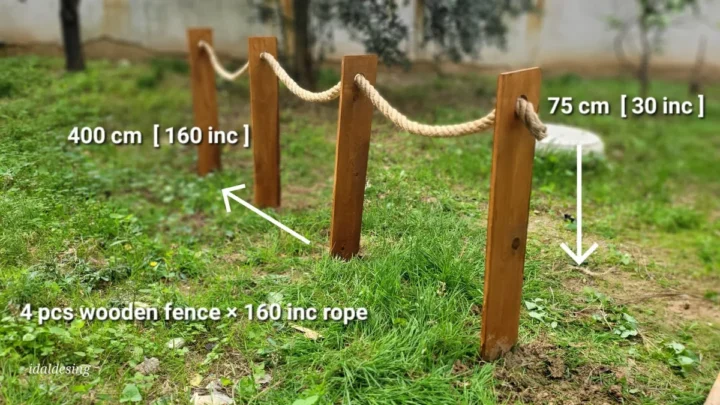
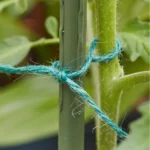
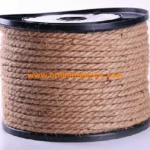
When securing a sleeve net to a plant stem, use plant-safe ties. Natural plant cordage won't abrade bark or harm resting caterpillars. Both hemp-based plant ties and jute-fibre ties break down naturally if left outdoors through the season.
Live Display and Photography Enclosures
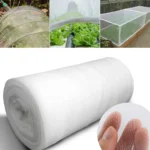
Use 0.5mm to 1mm in white or pale nylon mesh. Fine enough to prevent escape, open enough to photograph through without the mesh diffusing too much light or muddying image contrast.
Mistakes That Cost You Specimens or Kill Your Catch Rate
Matching mesh to the largest species, not the smallest. If you might encounter both swallowtails and blues in one session, use the mesh the blues require. The swallowtail won't escape through 0.8mm. The blue will be gone through 2mm before you've finished your swing.
Assuming all 1mm mesh is equivalent. Square-weave polyester at 1mm creates more drag and has rougher thread edges than hexagonal bobbinet at the same nominal size. When ordering, specify bobbinet if scale preservation matters.
Using fine mesh on a sweep net. Fine bobbinet doesn't survive repeated passes through vegetation. It tears early and once it goes, the session is over. Match the mesh to the job, not to what you have on hand.
Skimping on net depth. Mesh size is only half the equation. A shallow net doesn't give you room to flip the hoop and seal the butterfly inside. The minimum functional depth is 1.5x the hoop diameter. Twice the diameter is better.
Not replacing UV-degraded mesh. Nylon degrades under sustained UV exposure. Degraded thread roughens at the surface, creating more friction against wing scales. Aggregate feedback from entomological collecting communities confirms that most scale damage happens in older, weathered nets.
Securing sleeve nets with synthetic cord. Plastic ties and synthetic garden string can abrade plant bark and harm caterpillars resting near the tie point. Plant-safe natural ties are the better choice. Even heavier-duty natural cordage is gentler on stems and insects than synthetic rope.
The Lepidopterists' Society's ethical collecting guidelines at lepsoc.org treat net condition as part of responsible practice. A degraded net causes more specimen damage than any mesh size error ever will.
Frequently Asked Questions
What mesh size is best for a general butterfly catching net?
A 1mm nylon bobbinet opening covers most temperate field collecting. It retains the majority of mid-sized species you'll encounter and swings without significant drag. If you're regularly targeting small skippers, blues, or hairstreaks, step down to 0.5mm to 0.8mm.
Can I use tulle or organza instead of bobbinet?
You can, but there's a real trade-off. Tulle and organza are cheaper and widely available, but they create more drag for the same nominal opening because thread density is higher. For occasional hobbyist use they're workable.
For scale-sensitive taxonomy work, nylon bobbinet is worth the extra cost.
What mesh size do I need for a butterfly rearing enclosure?
Use 0.4mm to 0.6mm for rearing enclosures and sleeve nets. This range prevents newly hatched larvae from escaping while allowing enough airflow to prevent condensation on host plant leaves. Going finer than 0.4mm risks blocking too much air circulation.
How deep should a butterfly net be relative to the hoop?
Net depth should be at least 1.5 times the hoop diameter, and twice the diameter is better. A shallow net doesn't give you room to flip the hoop over and seal the butterfly inside. Depth matters just as much as mesh size for consistent captures.
Does mesh size matter for catch-and-release work?
Yes, possibly more than for collection. Scale loss from abrasive or oversized mesh weakens a released butterfly's ability to thermoregulate and find mates. Fine nylon bobbinet at 1mm or below minimises contact damage.
A deep net also reduces struggling time, which limits scale abrasion further.

Similar Posts